
White label SEO concept with laptop analytics, growth blocks, and business handshake in modern office setting
Most agencies hit the same ceiling. You’ve built a solid client base, your team is good at what they do, and growth is happening - but adding a new service line means hiring specialists, buying tools, training staff, and waiting months before it pays off. SEO is one of the most requested services from clients right now, and it’s one of the hardest to staff well.
According to Conductor’s 2025 research, 52% of companies plan to increase their SEO outsourcing budgets in the next 12 months. Your clients are going to look for SEO help somewhere. The only question is whether they find it through you or through someone else.
White label SEO lets agencies offer a fully managed, expert-delivered SEO service under their own brand - without building anything in-house. If you’ve been waiting for the right time to add it, the market data suggests that time is now.
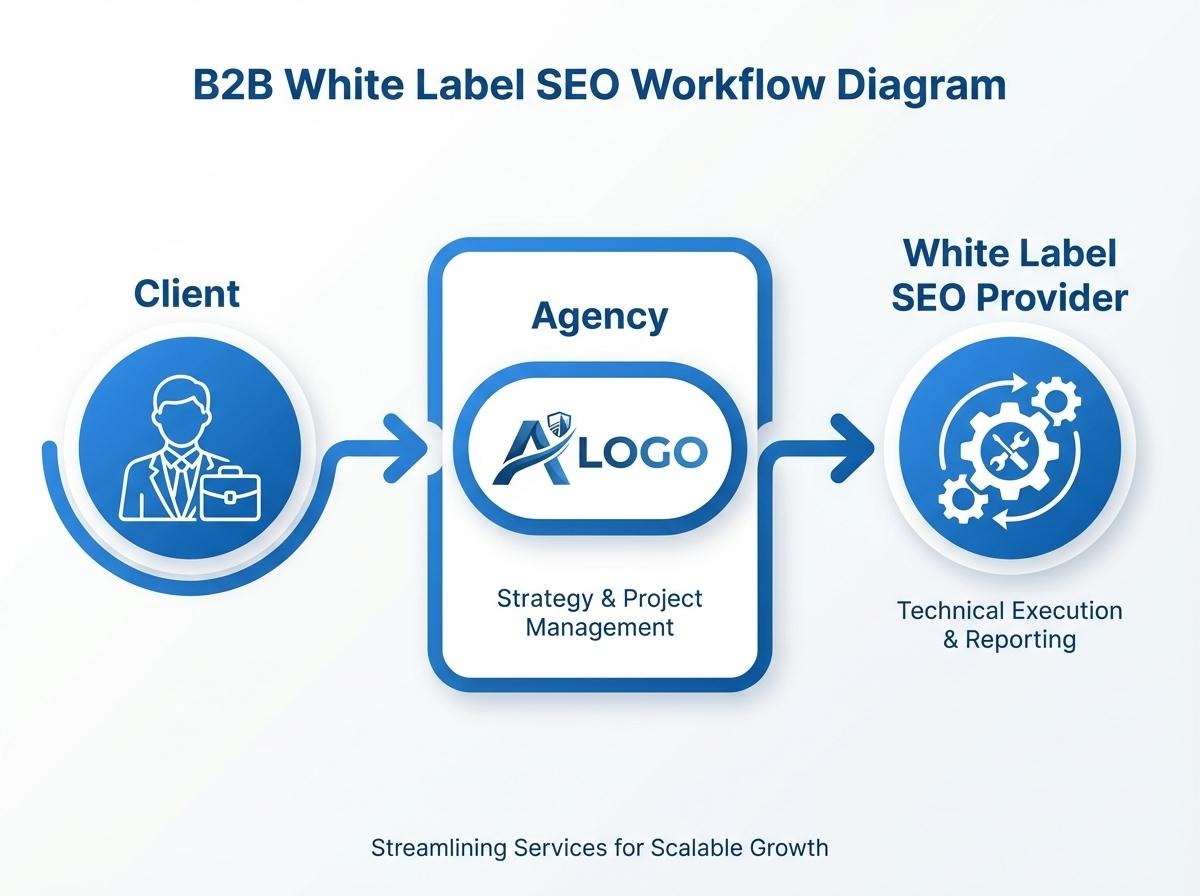
B2B white label SEO workflow showing client, agency, and provider roles with strategy, execution, and reporting flow
White label SEO isn’t the same as referring a client to another company. The key distinction is that your client never knows a third party is involved. All reports, communication, and deliverables come from your brand. You set the price, you own the relationship, and the provider does the technical work.
What’s included typically covers the full SEO stack: technical site audits, on-page optimization, content strategy, link building, and monthly reporting. Some providers also handle local SEO and schema markup. A good provider gives you everything you’d need to run an in-house team - minus the overhead.
To understand what this looks like in practice, reviewing white label SEO services for agencies gives you a clear picture of the full scope - from technical audits through to link building and branded client reporting.
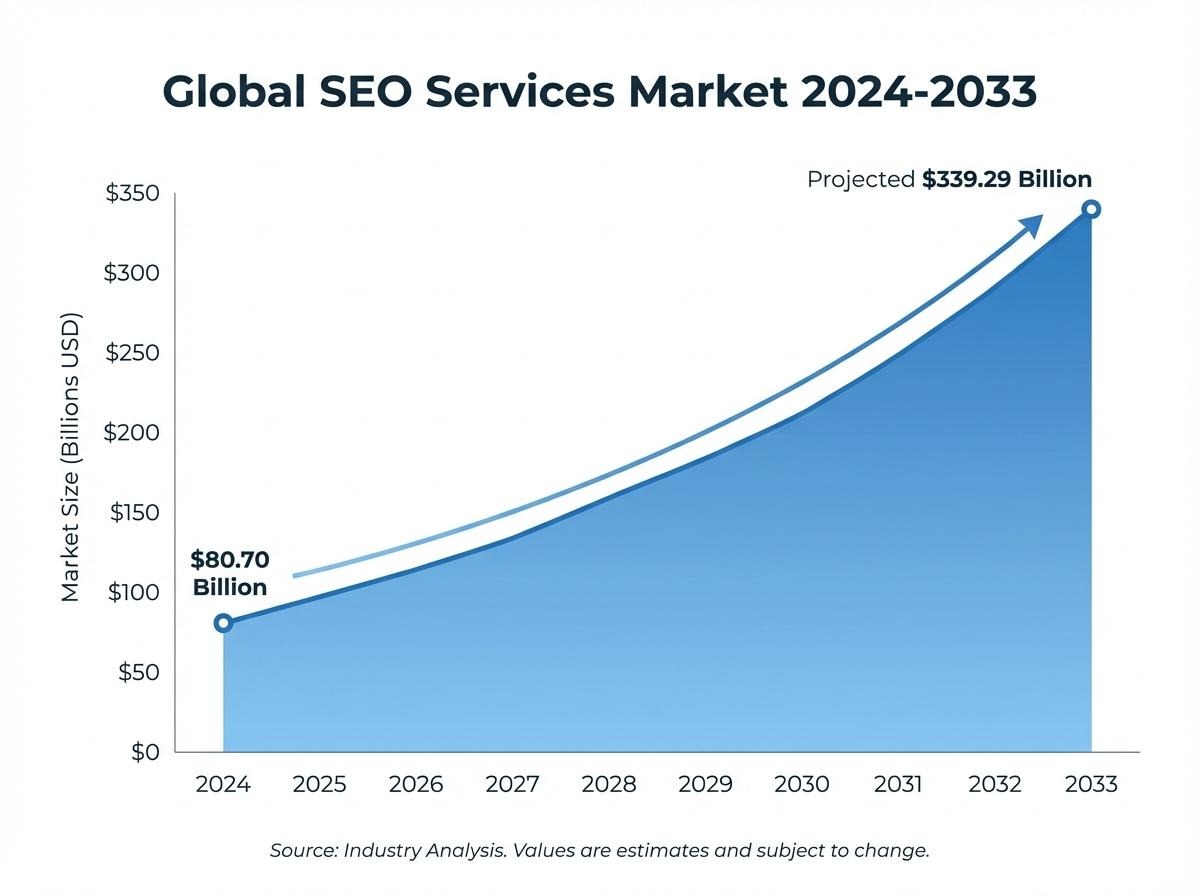
Global SEO services market growth from 2024 to 2033, rising from $80.7B to projected $339.29B
The numbers behind SEO demand are not subtle. According to IMARC Group’s SEO Services Market Report, the global SEO services market was valued at $80.70 billion in 2024 and is projected to reach $339.29 billion by 2033 - a compound annual growth rate of 16.44%.
Client-side behavior backs this up. Clutch’s 2024 research shows that over 54% of companies already outsource at least part of their SEO, and 61% of small businesses choose to outsource rather than build in-house teams. These aren’t startups with no budget - these are active buyers looking for a trusted service provider.
The ROI case is also clear. Search Engine Journal’s 2024 State of SEO report found that 49% of marketers say organic search delivers their highest ROI of any channel. When clients ask where they should put marketing budget, SEO is consistently near the top of that list.
Agencies that don’t offer SEO aren’t saving themselves the hassle. They’re just handing those clients and that recurring revenue to someone else.

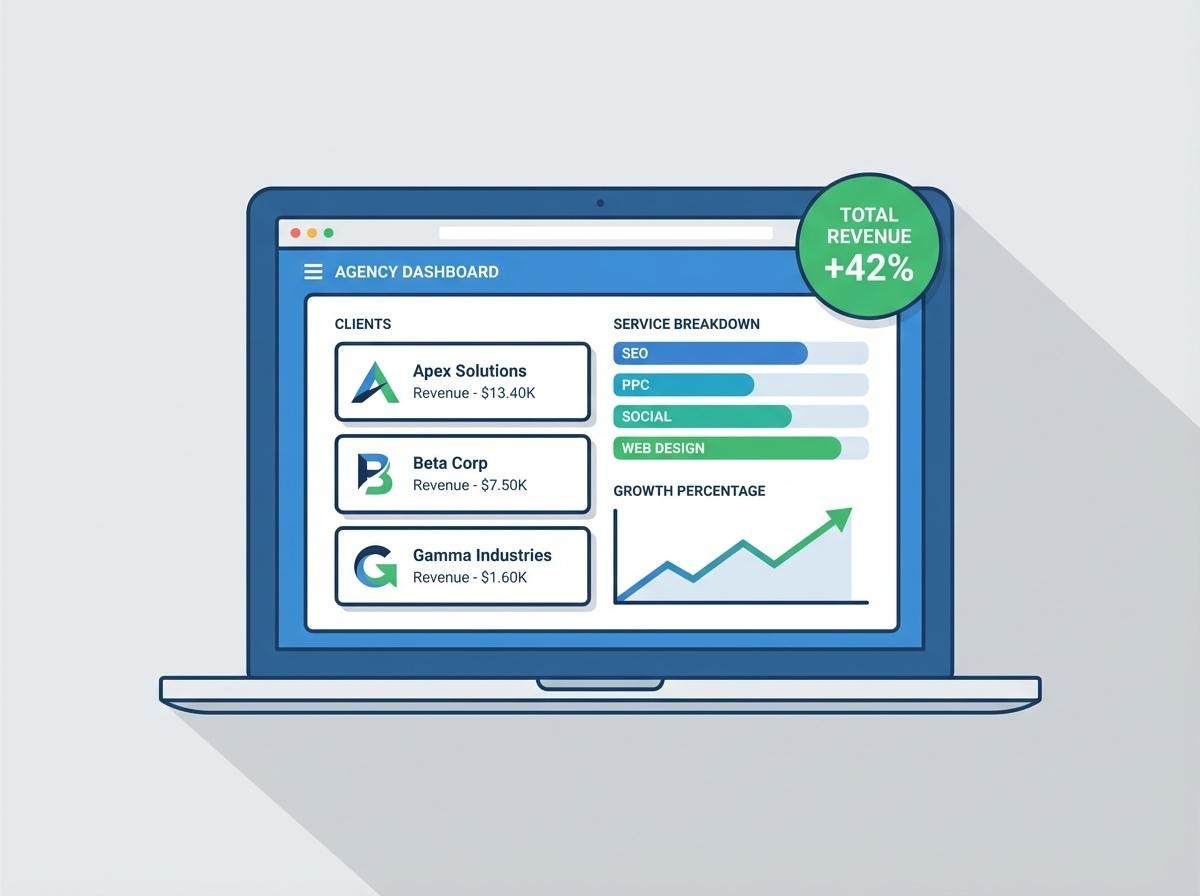
Agency dashboard on laptop showing clients, service breakdown, and revenue growth increase of 42%
The revenue impact of adding white label SEO is well-documented across agency case studies. Industry data cited by DashClicks’ 2024 agency growth report shows that agencies adding white label SEO to their service stack report average revenue increases of 35-50% within 12 months, with local SEO commanding the strongest margins.
The margin advantage comes from the cost structure. According to Near’s 2025 research on SEO outsourcing economics, outsourcing SEO saves companies 30-70% compared to maintaining an equivalent in-house team. You’re paying a wholesale rate to the provider and billing at retail - that spread is your margin.
There’s no hiring risk either. No salaries, no benefits, no tool subscriptions sitting idle during slow months. You add a client, the provider scales delivery. If a client churns, you don’t have a team member to lay off. The cost base stays variable, which matters a lot when you’re growing.
Client retention improves too, and this tends to be underappreciated. SEO is a long-term service. Clients who see consistent rankings and organic traffic growth stay longer than those who only use one-off project services. A well-delivered SEO program gives you a recurring revenue anchor that makes your agency financials far more predictable.
If you’re building the business case internally, it helps to frame this with a ROI-focused approach to client services - showing clients measurable outcomes rather than activity reports is what turns a short engagement into a long-term retainer.

Laptop showing SEO analytics dashboard with keyword rankings, traffic growth, and backlink metrics on desk
Not all white label SEO providers are the same, and choosing the wrong one damages your client relationships - not theirs. Here’s what actually matters when you’re evaluating options:
Transparent, white-labeled reporting. Your clients should receive reports that look like they came from your team. Providers who offer branded reporting dashboards save you significant time and let you maintain a professional front without awkward questions about who’s doing the work.
Link building quality. This is where a lot of providers cut corners. Link building is a core SEO deliverable, but it’s also where the quality gap between providers is widest. When evaluating a provider’s approach, it’s worth understanding the difference between dofollow and nofollow links - because a provider building mostly nofollow links is delivering far less ranking value than their reports might suggest.
Documented processes and SLAs. Vague delivery timelines are a red flag. A good provider can tell you exactly when deliverables land, what happens if they miss a deadline, and how escalations get handled. If they can’t answer these questions clearly before you sign, they won’t answer them when a client is breathing down your neck either.
Communication structure. You need a provider who understands their role. They execute. You communicate with clients. Any provider that insists on direct client contact - or makes it difficult for you to stay in the loop - creates delivery risk and brand risk at the same time.
Scalability. A provider who handles five clients well but falls apart at fifty isn’t a long-term partner. Ask for references from agencies their size and above. Ask what their onboarding capacity looks like and how they handle sudden volume increases.
The right provider isn’t just a subcontractor. They’re a delivery partner that makes your agency look more capable to every client you bring them - which is the whole point.
White label SEO isn’t a shortcut. It’s a deliberate choice to add a high-demand service without the overhead and risk of building it yourself. The market is growing fast, clients are already buying SEO from someone, and the revenue math works in your favor.
The agencies that do well with this model treat it seriously. They vet their providers, set clear expectations, and manage delivery like it’s their own team - because to their clients, it is. The ones who struggle pick the cheapest option and then wonder why results are inconsistent.
Start by looking at your current client list. Who among them would benefit from SEO right now but is getting it elsewhere - or not getting it at all? That’s your pipeline. Find a provider that meets the standards outlined here, and you’ve added a service line that can change the shape of your agency’s revenue within a year.
 AI tools to find & convert leads.
  Send emails at scale