B2B outreach has a response rate problem. Cold emails convert somewhere between 1% and 5% on a good day, and that number has been trending down for years as inboxes get more crowded and buyers grow more selective.
Most teams respond to declining response rates the same way - send more emails, test more subject lines, and add more follow-ups. The problem is that everyone is doing exactly that, which makes the noise worse for everyone.
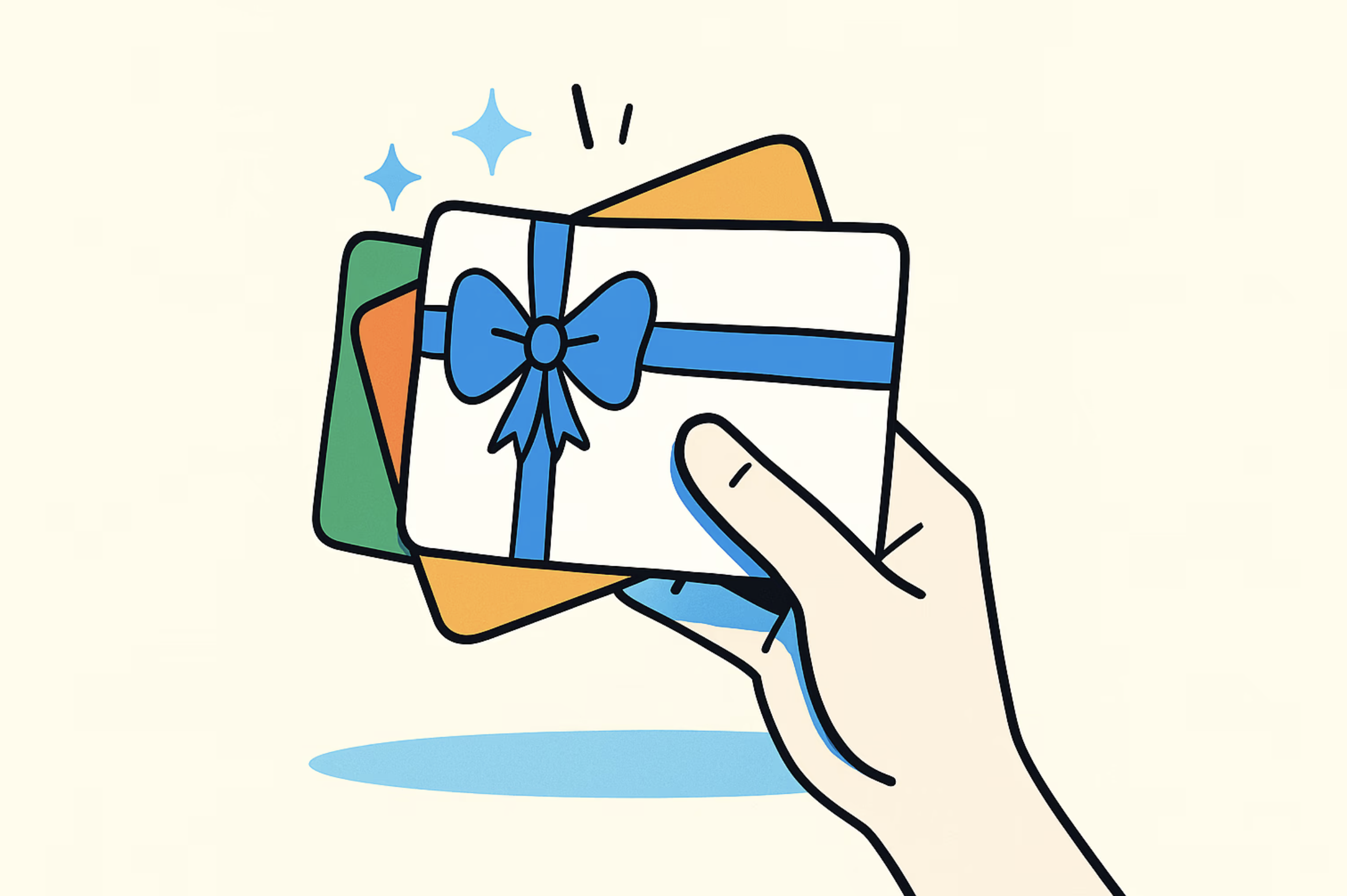
A growing number of sales and marketing teams are taking a different approach. They're adding digital gift cards to their outreach sequences - not as bribes, but as pattern interrupts that create enough goodwill to get a conversation started. When done well, it works. When done carelessly, it burns the budget and comes off as desperate.
Here's how to actually use gift cards to improve B2B outreach response rates without making your sequence feel like a raffle.
The reason gift card outreach works isn't complicated. It is driven by reciprocity, one of the most well-documented principles in behavioral economics.
Research found that a small gift doubled purchase rates in a sales context. In B2B, where deal cycles are longer and buying committees are larger, that kind of leverage matters. A $25 or $50 digital gift card doesn't buy a relationship, but it shifts the dynamic from "stranger asking for my time" to "someone who made a small gesture before the conversation even started."
This approach is different from discounting or offering a free trial. Those are transactional. A gift card sent before a demo request - with no strings attached if they decline - signals confidence and creates goodwill without applying pressure.
The order of operations matters. Sending the gift before the ask, not contingent on a response, is what activates the reciprocity effect. Tying the reward to a booking converts it into a transactional incentive, which is less effective and can feel manipulative.
How to Implement Gift Card Outreach Without Making It Feel Cheap
Execution matters as much as strategy. A poorly delivered gift card adds friction and damages the impression you're trying to make.
A few principles that separate effective gift card outreach from low-performing attempts:
Use digital cards, not physical ones. Physical gift cards take days to arrive and require address collection upfront, adding friction and feeling invasive early in an outreach relationship. Digital gift cards arrive instantly and require nothing from the recipient before they decide whether to engage.
Give recipients a choice of brands. A gift card locked to a single retailer assumes you know what the prospect wants. This becomes a bigger issue the moment your target list crosses borders, which is where international gift cards pull ahead. They let recipients pick from a wide catalog of brands and choose their preferred currency, so the gift actually lands well regardless of where they're based.
Keep the message lean. The gift card should not be the headline of your outreach email. Mention it briefly, explain why you're sending it, and move on to the actual reason for reaching out. Making the gift the centerpiece turns the email into an advertisement for your generosity, which defeats the purpose.
Don't overjustify the amount. Explaining at length why you chose a $50 card instead of a $100 one makes the outreach feel calculated. A single sentence is enough: "I know your time is valuable, so I've included a small thank - you regardless of whether you're interested in connecting."
Track delivery and redemption. Whether a recipient opens the gift card notification is a signal worth capturing. Redemption activity can inform follow-up timing - a prospect who redeems the card within 24 hours is demonstrably more engaged than one who hasn't touched it.
Why Standard Outreach Is Losing Effectiveness
Before getting into the mechanics of gift card outreach, it's worth understanding why the baseline is so low.
The average B2B decision-maker receives dozens of unsolicited messages per day across email, LinkedIn, and phone. They've developed pattern recognition for sales outreach - a familiar subject line structure, an opening compliment, a pitch, and a call to action. The delete reflex kicks in before they've finished the first sentence.
This is partly why multichannel outreach has gained traction as an alternative to email - only campaigns. Reaching someone across multiple touchpoints before asking for a meeting builds familiarity, which lowers resistance. Even multichannel approaches can reach a limit if the underlying message lacks the compelling power to penetrate.
Gift cards solve a different part of the problem. They introduce a tangible, personal element into a channel that has become almost entirely templated. The recipient is offered something in return for their time, which changes the framing of the entire interaction.
Not every stage of the outreach funnel benefits equally from gift card incentives. Here's where the evidence is strongest.
| Funnel stage | Use case | Recommended gift value |
| Cold outreach | Intro email to high-value prospects | $25–$50 |
| Demo booking | Attendance incentive for 30-min demo | $25–$50 |
| Post - demo follow-up | Keeps you top-of-mind after the meeting | $15–$25 |
| Re-engagement | Restarts cold prospects after 2+ weeks of silence | $25–$40 |
| Deal acceleration | Milestone touchpoint during late-stage negotiations | $50–$100 |
For high-value prospects - enterprise accounts, hard-to-reach executives, and niche verticals with small addressable markets -adding a digital gift card to an intro email can more than double reply rates. A test was found that gift card incentives decreased cost per lead by 81% and more than doubled response rates when used as part of a LinkedIn outreach campaign.
The ideal range for cold outreach is $25 to $50. Higher amounts can actually reduce trust because they feel disproportionate to the ask, signaling desperation rather than generosity.
Offering a gift card in exchange for attending a demo is one of the most established use cases in B2B sales. The prospect gets concrete value for their time. The sales team gets a higher-intent meeting and a tangible reason to follow up afterward.
This works especially well when the meeting is genuinely short - 20 to 30 minutes -and the offer is specific about what the prospect will see. Vague demo invitations paired with gift cards still underperform against well-positioned, time-bounded requests.
When a prospect has gone cold after initial engagement - they read your emails, maybe even replied once, then disappeared -a gift card can restart the conversation without another "just checking in" message.
A short, direct email that acknowledges the gap, offers something tangible, and asks one straightforward question outperforms a longer re-engagement pitch in most situations. The gift card creates a reason to respond that is not tied to whether they are ready to buy.

The biggest implementation mistake is treating gift card outreach as a one-off campaign rather than a systematic part of the outreach process.
A basic structure that consistently performs:
Day 1 - Send the gift card with a short intro email explaining why you're reaching out. No demo request in this message.
Day 3 - Follow up with a value-focused message that references the gift. Ask a single specific question tied to a challenge relevant to their role.
Day 7 - Make the meeting request. Keep it specific: a date, a duration, a clear agenda.
Day 14 - Re-engagement if no reply. Acknowledge the silence, not the gift.
This treats the gift card as the opening of a conversation, not a conversion mechanism. The follow-ups do the actual selling work.
For teams running this approach at scale, building a solid cold outreach infrastructure matters just as much as the incentive itself. Deliverability problems, poor list quality, and generic copy will undermine even a well-funded gifting program before it has a chance to work.
A common concern is whether gift card outreach is cost-effective for high-volume prospecting. The short answer is it doesn't work well at high volume, and it's not designed to.
Gift card outreach is most effective when focused on a narrowly defined set of high-value accounts. For accounts where a single deal is worth $50,000 or more, spending $50–$100 per prospect on targeted, personalized outreach is a straightforward ROI calculation.
According to data from the Incentive Research Foundation, 88% of companies that use non-cash incentives choose gift cards - partly because of flexibility and partly because the outcomes are trackable in a way that other incentive formats aren't. That traceability makes it easier to tie gift card spend to pipeline outcomes and justify the budget internally.
A tiered approach is more effective in mid-market accounts than applying the same gift card value universally. Reserve higher-value cards for the most senior or hardest-to-reach contacts. Use lower-value cards for broader outreach where volume is greater while deal size is smaller.
A few patterns that consistently underperform:
Using gift cards as a last resort. If gift cards only come out after six unanswered follow-ups, they read as desperation. They work better when introduced early, with confidence.
Sending to unqualified lists. A gift card doesn't make a bad prospect a good one. The quality of your targeting still determines the quality of your pipeline. An incentive added to a poorly qualified list results in pricier and ineffective outreach.
Skipping personalization. The gift card creates goodwill. The message creates relevance. If the email copy is generic, that goodwill doesn't translate into a conversation.
Using low-quality delivery platforms. Delayed delivery, broken redemption links, and limited brand selection all erode the impression the gift was supposed to create. The technical experience of receiving and redeeming a gift card is part of the gift itself.
Digital gift cards aren't a substitute for a successful outreach strategy; they're an enhancement to one that's already working. The fundamentals still matter: strong list quality, relevant personalization, and a clear value proposition in the copy.
What gift cards add is a concrete reason for the recipient to pause before deleting the email. In a channel where the default is to ignore, that pause is worth something. For the right accounts, at the right stage of the funnel, with the right execution, that pause turns into a reply more often than standard outreach does.
Begin with a small scale, monitor the outcomes, and allow the data to reveal the optimal position for gift card outreach within your sequence.
 AI tools to find & convert leads.
  Send emails at scale