In the rapidly evolving landscape of 2026, mastering lead generation is crucial for businesses aiming to sustain growth and competitiveness. This comprehensive guide explores the dynamic strategies of email marketing, inbound marketing, and paid advertising, offering insights into how each can be leveraged to attract and convert potential customers. Readers will discover the importance of effective lead generation for business expansion, delve into the nuances of email deliverability and personalization, and learn how inbound marketing can drive quality leads. The guide also examines paid advertising's role in reaching targeted audiences swiftly, compares these strategies to help businesses choose the right approach, and highlights the benefits of integrating multiple tactics for maximum impact. With practical applications and future trends outlined, this article equips businesses with the knowledge to refine their lead generation efforts and stay ahead in a competitive market.
In 2026, businesses are leveraging a combination of email marketing, inbound marketing, and paid advertising to drive effective lead generation. Email marketing remains a cornerstone strategy due to its high return on investment, often yielding up to $36 for every dollar spent. This makes it a cost-effective choice for reaching potential customers directly in their inboxes with personalized content.
Inbound marketing continues to be essential, focusing on attracting customers through content creation and engagement. This strategy builds trust and authority, drawing in leads organically. Meanwhile, paid advertising, with an average cost per click projected at $5.42, offers immediate visibility and the ability to target specific demographics, providing a balanced approach when combined with organic methods.
To maximize the potential of email marketing, businesses in 2026 are focusing on understanding their audience and building quality email lists. Personalization is key, as tailored messages significantly increase engagement and response rates. Companies are also employing automation tools to streamline their campaigns, allowing for more efficient lead nurturing and shorter sales cycles.
Compliance with regulations remains critical to ensure campaigns are both effective and lawful. Businesses must stay informed about privacy laws and consent requirements to maintain trust and avoid penalties. By integrating analytics, companies can continuously refine their strategies, ensuring that their email marketing efforts are both compliant and impactful.
For more insights on lead generation strategies, explore this comprehensive guide.
Understanding the various lead generation strategies is crucial, as it sets the foundation for recognising their significance in driving business growth.
As we move into 2026, email marketing continues to be a cornerstone of lead generation strategies. The latest trends highlight the growing importance of personalization and automation. Businesses are increasingly using AI to analyze customer data, enabling them to send highly targeted and personalized emails. This approach not only boosts engagement rates but also enhances the overall customer experience.
Another significant trend is the integration of interactive elements within emails. Features such as polls, surveys, and clickable images are being utilized to increase user interaction and engagement. Additionally, with the rise of mobile usage, optimizing emails for mobile devices is more crucial than ever, ensuring that content is accessible and visually appealing across all platforms.
Personalization in email marketing has evolved beyond simply addressing the recipient by name. It now involves leveraging behavioral data to tailor content to individual preferences and past interactions. By segmenting their email lists based on user behavior, businesses can deliver more relevant content, which is likely to increase open and click-through rates.
For instance, sending personalized product recommendations or exclusive offers based on previous purchases can significantly enhance customer loyalty and conversion rates. Companies are also using dynamic content, which adjusts the email's content in real-time based on the recipient’s current behavior or location.
For more insights into the latest trends, you can explore this comprehensive guide.
Having established the significance of effective lead generation for business growth, we can now delve into one of the most impactful strategies: email marketing.

In 2026, effective email marketing strategies are crucial for businesses aiming to enhance their lead generation efforts. One of the most significant trends is the focus on email deliverability and maintaining a positive sender reputation. Ensuring emails reach the intended inbox involves using authentication protocols like SPF and DKIM, which help verify the sender's identity and improve trust with email service providers.
Another key strategy is leveraging behavioral data for segmentation. By analyzing how subscribers interact with previous emails, businesses can tailor content to match individual preferences, leading to higher engagement rates. This shift from traditional demographic-based segmentation to behavior-based approaches allows for more personalized and relevant messaging.
Additionally, the timing of email delivery has evolved. Instead of relying on generalized best times, businesses are adopting just-in-time delivery methods. This approach utilizes AI to determine the optimal moment to send an email based on user behavior patterns, ensuring messages are received when subscribers are most likely to engage.
Improving email deliverability is essential for maximizing the impact of email marketing campaigns. Businesses can enhance deliverability by maintaining a clean email list, which involves regularly removing inactive subscribers and ensuring all email addresses are valid. This practice helps maintain a high sender score, crucial for avoiding spam filters.
Another important aspect is the design of emails for various devices. With the increasing use of mobile devices, emails must be optimized for smaller screens. Responsive design ensures that emails are easily readable and visually appealing across all devices, reducing the likelihood of them being marked as spam.
Moreover, personalization plays a significant role in improving deliverability. Personalizing subject lines and content based on user behavior can significantly increase open rates. Studies show that personalized emails have a 29% higher open rate and a 41% higher click-through rate than generic ones, making personalization a powerful tool for email marketers.
For more insights into effective email marketing strategies, visit this article.
Before diving into the specifics of How Inbound Marketing Drives Quality Leads, it's essential to grasp the foundational elements that define this approach. Inbound marketing focuses on attracting customers through relevant and helpful content, creating experiences tailored to them. This strategy is a key component of Lead Generation Strategies for 2026: Email Marketing, Inbound Marketing, and Paid Advertising, as it prioritizes quality over quantity, ensuring that the leads generated are more likely to convert.
Many businesses fall into common traps when implementing inbound marketing. For instance, failing to align content with the target audience's needs can lead to ineffective campaigns. Here are some typical mistakes and how to avoid them:
To effectively drive quality leads through inbound marketing, consider the following practical steps. First, develop a content strategy that aligns with your business goals and audience needs. Next, utilize analytics tools to track performance and adjust tactics as needed. Finally, ensure that your team is well-trained in the latest inbound marketing techniques to maintain a competitive edge.
Paid advertising is a crucial component of modern lead generation strategies, offering businesses a way to reach targeted audiences quickly and effectively. This approach involves paying for ad placements on platforms such as search engines, social media, and other digital spaces to attract potential customers. The key advantage of paid advertising is its ability to deliver immediate visibility, allowing businesses to connect with audiences who are actively searching for their products or services.
Before diving into paid advertising, it's essential to understand the different types available, such as pay-per-click (PPC), display ads, and social media ads. Each type has its unique strengths and is suited to different business goals. For instance, PPC is ideal for businesses looking to capture high-intent leads, while display ads are effective for brand awareness. Choosing the right type depends on your business objectives and target audience.
Implementing a successful paid advertising campaign requires careful planning and execution. Start by defining clear objectives, such as increasing website traffic or generating more leads. Next, identify your target audience by analyzing demographics, interests, and online behaviors. This information will help you tailor your ads to resonate with potential customers.
Next, select the appropriate platforms for your ads. For instance, Google Ads is excellent for search visibility, while platforms like Facebook and Instagram are ideal for engaging with users through visually appealing content. Monitor your campaigns regularly to assess their performance. Key metrics to track include click-through rates (CTR), conversion rates, and return on ad spend (ROAS). Adjust your strategy based on these insights to optimize results.
Finally, it's crucial to avoid common mistakes such as neglecting to set a budget or targeting too broad an audience. These errors can lead to overspending without achieving desired outcomes. By focusing on precise targeting and clear objectives, businesses can maximize the effectiveness of their paid advertising efforts. For further insights into enhancing your lead generation strategy, consider exploring the Top 7 Sms Marketing Platforms To Supercharge Your Lead Generation Strategy In 2026.
Having explored the significance of paid advertising in lead generation, it is essential to examine how email marketing and inbound marketing compare to this approach in effectiveness and strategy.
Before diving into the specifics of each strategy, it's crucial to grasp the fundamental principles of email marketing, inbound marketing, and paid advertising. Email marketing revolves around sending targeted emails to nurture leads and convert them into customers. It's a direct approach that relies heavily on personalization and segmentation to be effective.
Inbound marketing, on the other hand, focuses on attracting customers through valuable content and experiences tailored to them. This strategy includes SEO, content marketing, and social media to draw potential leads naturally. Paid advertising, meanwhile, involves purchasing ad space to reach potential customers quickly. It can be executed through platforms like Google Ads or social media ads, offering instant visibility but requiring a budget.
Each strategy has its tradeoffs, and understanding these can help you decide which to implement. Email marketing is cost-effective and allows for high personalization, but it requires a well-maintained list and can suffer from low open rates if not executed properly. In contrast, inbound marketing builds long-term trust and authority but demands consistent effort and time to see significant results.
Paid advertising provides immediate exposure and measurable results, making it ideal for short-term campaigns or product launches. However, it can be expensive, and without careful targeting, it may not yield the desired return on investment. For businesses with limited budgets, a mix of inbound marketing and email marketing might be more sustainable, while those with resources to spare can benefit from the quick wins of paid advertising.
To evaluate the effectiveness of your chosen strategy, track metrics such as conversion rates, customer acquisition costs, and return on investment. This data will guide adjustments and ensure that your lead generation efforts align with your business goals. For more insights on utilizing email marketing as part of your lead generation strategy, consider exploring best practices that can enhance your approach.
Before selecting a lead generation strategy, it's crucial to understand the core elements that influence its effectiveness. Businesses need to consider their target audience, budget constraints, and the specific goals they aim to achieve. For instance, if a company targets a younger demographic active on social media, paid advertising might be more effective. Conversely, if the target audience prefers in-depth content, inbound marketing could be the better option.
Additionally, the company's existing resources and capabilities play a significant role. A business with a robust content creation team may excel in inbound marketing, while another with a strong sales force might benefit more from email marketing. Evaluating these factors ensures that the chosen strategy aligns with the company's strengths and market opportunities.
| Strategy | Target Audience | Key Strengths |
|---|---|---|
| Email Marketing | Professionals, B2B | Strong sales force, personalized content |
| Inbound Marketing | Content seekers, B2C | Robust content creation team |
| Paid Advertising | Younger demographics, social media users | Budget flexibility, quick reach |
One common mistake businesses make is not aligning their lead generation strategy with their overall marketing objectives. This misalignment can lead to wasted resources and poor results. To avoid this, companies should establish clear, measurable goals and regularly assess their strategy’s performance against these benchmarks. Metrics such as conversion rates, lead quality, and return on investment are critical indicators of success.
Another pitfall is neglecting to adapt strategies based on performance data. For example, if email marketing campaigns show low engagement rates, it might be time to refine the messaging or target a different audience segment. Regularly reviewing and adjusting the approach ensures that the strategy remains effective and responsive to market changes. For more insights on optimizing email marketing, explore this detailed guide.
By understanding these key criteria and avoiding common pitfalls, businesses can effectively choose and implement the right lead generation strategies for 2026: Email Marketing, Inbound Marketing, and Paid Advertising, ensuring sustainable growth and competitive advantage.

As you consider the key criteria for selecting an effective lead generation strategy, it's essential to explore how integrating multiple approaches can enhance overall effectiveness and reach.
In 2026, an effective lead generation strategy is built on a foundation of content marketing, which serves as the initial touchpoint for potential leads. High-quality, relevant content attracts and engages prospects, driving them to interact with your brand. Email marketing plays a crucial role in nurturing these leads by providing personalized communication that aligns with their interests and needs. For B2B marketers, email remains a top channel, with 73% considering it essential for revenue generation.
Incorporating paid advertising is also vital to complement organic strategies. Paid ads can enhance visibility and reach a broader audience, with the average cost per lead in this domain being approximately $66.69 across industries. This investment can yield high returns by targeting specific demographics and behaviors, thereby increasing the likelihood of conversion.
Businesses can effectively integrate email marketing with other lead generation methods by leveraging data-driven approaches for targeting and segmentation. By analyzing behavioral insights, companies can tailor their email campaigns to match the timing and interests of their audience, enhancing engagement and conversion rates. For instance, personalization based on buying intent can significantly boost the relevance of email outreach.
Moreover, maintaining email deliverability is crucial for ensuring that messages reach the intended recipients. Best practices include regularly cleaning email lists and avoiding spammy content. To maximize the impact, a multi-channel approach should be employed, combining email with social media, SEO, and paid advertising to engage prospects at various stages of the buying cycle. This holistic strategy not only increases reach but also reinforces brand presence across different platforms.
For more insights on integrating email marketing into B2B lead generation, explore the detailed guide on enginy.ai.
Having explored the integration of various lead generation strategies, we can now delve into the practical applications of email marketing, a vital component in effectively engaging potential leads.
In 2026, ensuring high email deliverability is crucial for successful lead generation. With inbox providers tightening their algorithms, maintaining a strong sender reputation is more important than ever. To achieve this, businesses should focus on using verified domains and regularly cleaning their email lists to remove inactive or invalid addresses. This helps in reducing bounce rates and enhances the chances of landing in the recipient’s primary inbox.
Another effective strategy is to implement authentication protocols like SPF, DKIM, and DMARC. These protocols verify the sender's identity, reducing the risk of emails being marked as spam. Additionally, personalizing emails and ensuring they are relevant to the recipient can significantly improve engagement rates, further boosting deliverability.
Segmenting email lists based on user behavior is a powerful way to enhance personalization and relevance in email marketing. By utilizing behavioral data, businesses can tailor their content to match the interests and actions of their subscribers. This could include segmenting users who have abandoned carts, frequently purchased products, or engaged with specific types of content.
Advanced segmentation techniques can involve tracking user interactions across multiple touchpoints, such as website visits, past purchases, and email engagement metrics. By doing so, marketers can create highly targeted campaigns that resonate with specific audience segments, ultimately improving conversion rates and customer satisfaction.
For more insights on developing effective email marketing strategies, consider exploring this comprehensive guide.
| Strategy | Benefits |
|---|---|
| Email Authentication Protocols | Improves sender reputation and reduces spam risk |
| Behavioral Segmentation | Enhances personalization and engagement |
As businesses explore various lead generation strategies, understanding how to implement inbound marketing tactics effectively can complement the insights gained from email marketing practices.
Personalization in email marketing is crucial for enhancing engagement and conversion rates. By tailoring content to individual preferences, businesses can achieve transaction rates up to six times higher than generic emails. This involves segmenting your audience based on demographics, behavior, and past interactions to deliver relevant content. Companies should leverage data analytics to understand customer preferences and craft personalized messages that resonate.
Moreover, creating dynamic content that changes based on the recipient's profile can further boost engagement. For instance, using personalized subject lines and preview texts can significantly increase open rates. It's essential to strike a balance between personalization and respecting data privacy to maintain trust with your subscribers.
Artificial Intelligence (AI) has become an invaluable tool in optimizing email marketing workflows. AI can assist in predicting customer behavior, automating segmentation, and personalizing content at scale. This technology enables businesses to send the right message at the right time, increasing the likelihood of conversions. AI tools can also help in crafting compelling subject lines by analyzing past campaign performances and suggesting improvements.
Additionally, AI can streamline the process of creating structured email journeys. Instead of relying on one-off campaigns, businesses can design comprehensive journeys that nurture leads through the sales funnel. This approach ensures consistent engagement and builds stronger relationships with potential customers.
For more insights on enhancing your email marketing strategy, platforms focused on data enrichment tools can help teams achieve better targeting and personalization.
Tracking the right key performance indicators (KPIs) is crucial for evaluating the success of your email marketing efforts. Essential KPIs include open rates, click-through rates (CTR), and conversion rates. Open rates provide insight into how well your subject lines are performing, while CTRs indicate the effectiveness of your email content in engaging recipients. Conversion rates, on the other hand, measure the ultimate success of your campaigns by showing how many recipients took the desired action, such as signing up for a webinar or downloading a whitepaper.
Additionally, it’s important to consider the return on investment (ROI) of your email campaigns. On average, email marketing offers a return of $42 for every dollar spent, making it a highly effective strategy when executed properly. By focusing on these KPIs, businesses can gain a comprehensive understanding of their email marketing performance and make data-driven decisions to enhance future campaigns.
Paid advertising is a powerful tool for lead generation, but it requires careful management to ensure a positive ROI. The average cost per lead in paid advertising is approximately $66.69, which highlights the need for optimizing ad spend. Businesses should focus on targeting the right audience segments and using compelling ad creatives to maximize engagement and conversions.
To effectively measure the success of paid advertising, it’s essential to track metrics such as cost per acquisition (CPA), click-through rates, and conversion rates. These metrics provide insights into how well your ads are performing and whether they are generating high-quality leads. By continuously analyzing these metrics, businesses can refine their strategies, allocate budgets more efficiently, and ultimately improve their lead generation outcomes.
For more detailed insights on measuring email marketing KPIs, visit this article.
As we look ahead, understanding the evolving landscape of lead generation strategies will be crucial for adapting to future trends that will shape marketing practices beyond 2026.
As we look beyond 2026, it's crucial to understand how emerging technologies will shape lead generation strategies. Technologies such as artificial intelligence (AI) and machine learning are expected to play a significant role in automating and optimizing marketing efforts. These technologies allow for more personalized and data-driven approaches, enabling businesses to target potential leads with precision. For instance, AI can analyze vast amounts of customer data to predict purchasing behavior, allowing marketers to tailor their strategies accordingly.
Another trend to watch is the increasing use of virtual and augmented reality in marketing campaigns. These technologies offer immersive experiences that can engage potential leads in novel ways. For example, a real estate company might use virtual reality to offer virtual tours of properties, providing an interactive experience that can capture the interest of potential buyers. Understanding these technologies and their applications is essential for businesses aiming to stay ahead in lead generation.
To effectively implement future-proof lead generation strategies, businesses should start by integrating new technologies into their existing marketing frameworks. This integration often involves investing in the right tools and platforms that support AI and machine learning capabilities. It's also important to train marketing teams to leverage these technologies effectively, ensuring they can analyze data and adjust strategies in real-time.
Another practical step is to continuously monitor and evaluate the effectiveness of these strategies. Setting clear metrics and KPIs will help businesses determine whether their lead generation efforts are yielding the desired results. Regularly reviewing these metrics allows for timely adjustments and improvements. For instance, if a particular AI-driven campaign is not performing as expected, marketers can quickly pivot to alternative strategies.
By staying informed about emerging technologies and implementing flexible, data-driven approaches, businesses can enhance their Lead Generation Strategies for 2026: Email Marketing, Inbound Marketing, and Paid Advertising. For additional insights on innovative marketing tactics, consider exploring 5 Reddit Marketing Strategies That Actually Work For Brands In 2026.
In conclusion, navigating the landscape of lead generation in 2026 requires a strategic blend of email marketing, inbound marketing, and paid advertising to effectively attract and convert potential customers. Email marketing stands out with its impressive return on investment, driven by personalization and automation trends that leverage AI for targeted communication. Inbound marketing complements this by focusing on content that builds trust and authority, ensuring that leads are both high-quality and engaged. Meanwhile, paid advertising offers the immediacy and precision needed to reach specific demographics swiftly, making it an indispensable part of a holistic strategy. As businesses weigh these options, understanding key criteria such as audience preferences and budget constraints is crucial for selecting the most effective approach. The integration of these strategies maximizes their collective impact, providing a robust framework for sustainable growth. To stay ahead in this competitive landscape, businesses should continuously refine their tactics by leveraging emerging technologies and data analytics, ensuring their lead generation efforts remain both innovative and effective.
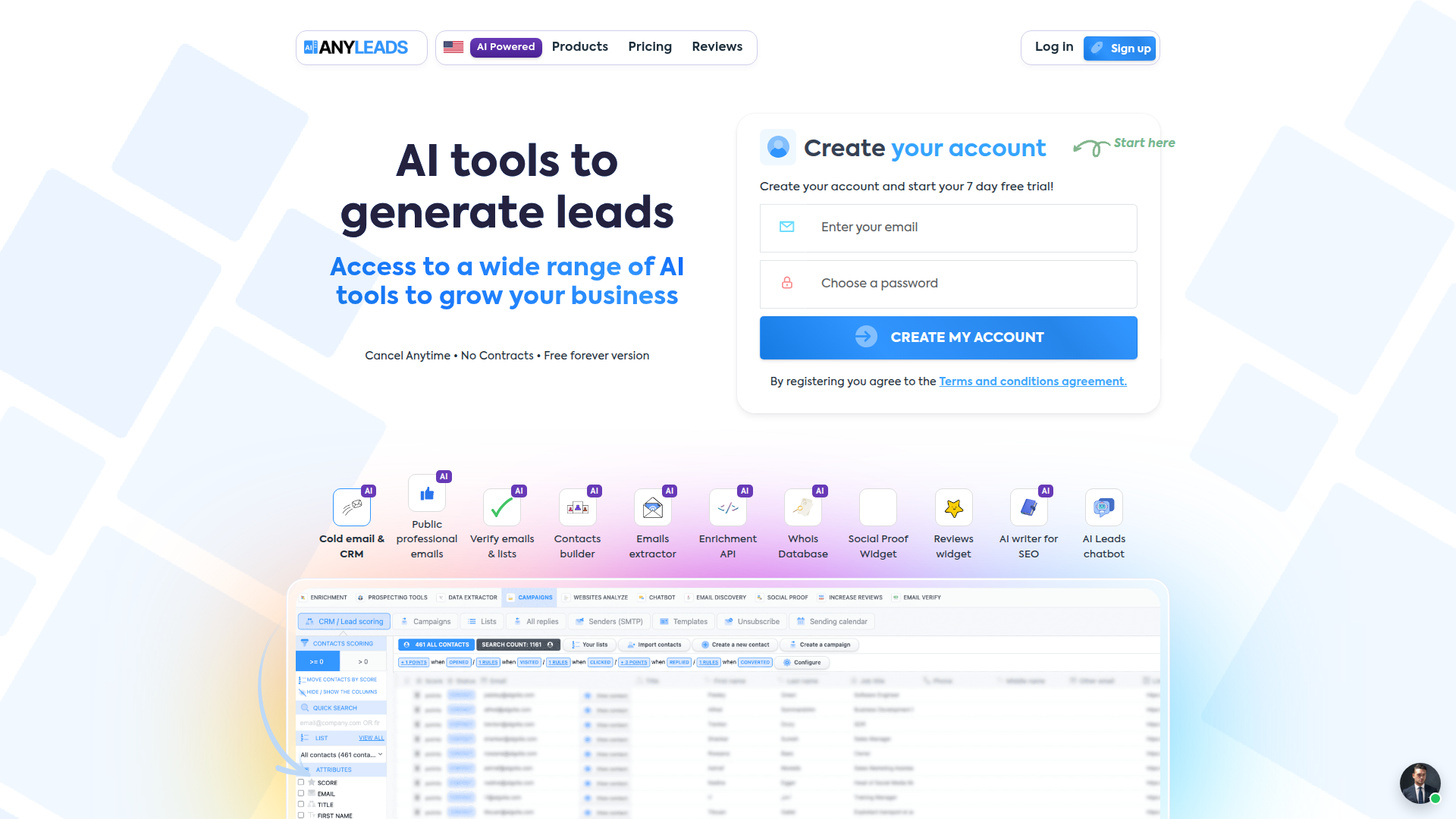
Explore the power of Anyleads, a cutting-edge lead generation software that empowers businesses with advanced AI tools for finding and converting leads. From automated outreach with intelligent email sequences to B2B email discovery, Anyleads streamlines your marketing efforts by automating tasks like email verification and data enrichment. Whether you're a sales team, marketer, or recruiter, Anyleads offers the features you need to enhance your prospecting and boost conversion rates effectively. Discover more about Anyleads today!
 AI tools to find & convert leads.
 Send emails at scale