How do people feel about shopping online? If over 55% of the world’s population shop online, and 43.2% use the web to research products and brands, then global sentiment toward digital retail must be positive, right?
Well, that’s still up for debate. Yes, online shopping is convenient. It can even be enjoyable. But the digital buyer’s journey can also be frustrating.
Consumer research discovered that 75% of people feel bombarded by advertising, 73% are overwhelmed by too many product options, and 71% get confused while browsing because of inconsistent product descriptions and terminology. This data clearly indicates that brands need to make online buying decisions easier, less stressful, and more user-friendly. So, what’s the best way to reach these goals? Product education.
This guide examines the power of product education, with the sole aim of making online buying decisions easier for your target audience.
In 2026, consumers are increasingly value-centric in their shopping behavior. They’re not just looking for the best quality for the price when browsing solutions to their pain points; they’re also trading down. Furthermore, 67% of shoppers say they would not invest in a product if it didn’t deliver sufficient value, even if they could afford it.
With these findings in mind, the best way to make online buying decisions easier is to help shoppers assess product value. And that’s where transparent pricing information comes into play.
This strategy relies on open, honest communication that prioritizes your audience’s understanding of what your brand can deliver. Essentially, transparent pricing information combines product education with risk management. In doing so, it earns consumer trust, reduces uncertainty, and boosts purchase intent.
Of course, the most effective way to educate your audience through price transparency isn’t just to openly communicate all included/omitted costs. Instead, it’s equally important to help shoppers understand how different material, customization, and feature choices affect the final cost of their order.
Pergola Kits USA, for instance, knows that cost is a major purchase-influencing factor for its target audience. So, the brand uses educational content to help leads understand the added value of choosing a larger construction. Pergola Kits USA addresses the relationship between square footage and price, ensuring shoppers recognize that twice as big a structure only means a 25% cost increase.

Source: pergolakitsusa.com
Some products are relatively straightforward, so you can describe them with simple, to-the-point copy. And in many industries, that’s enough to educate your audience and make online buying decisions easier.
But what about complex solutions that require consumers to have at least some expertise or experience to recognize your offer’s value? In these cases, you will need to make your explanations more educational to ensure your target audience understands the benefits of your solutions.
Starting with readability optimization is always an excellent first step. Research shows a direct link between landing page copy complexity and consumers’ purchase intent: simpler, shorter text sells better. But this doesn’t mean your product explanations need to be shorter and less informative. No, they still have to deliver the same level of informational value. The key, however, is adapting that information to your ideal customers’ pre-purchase knowledge.
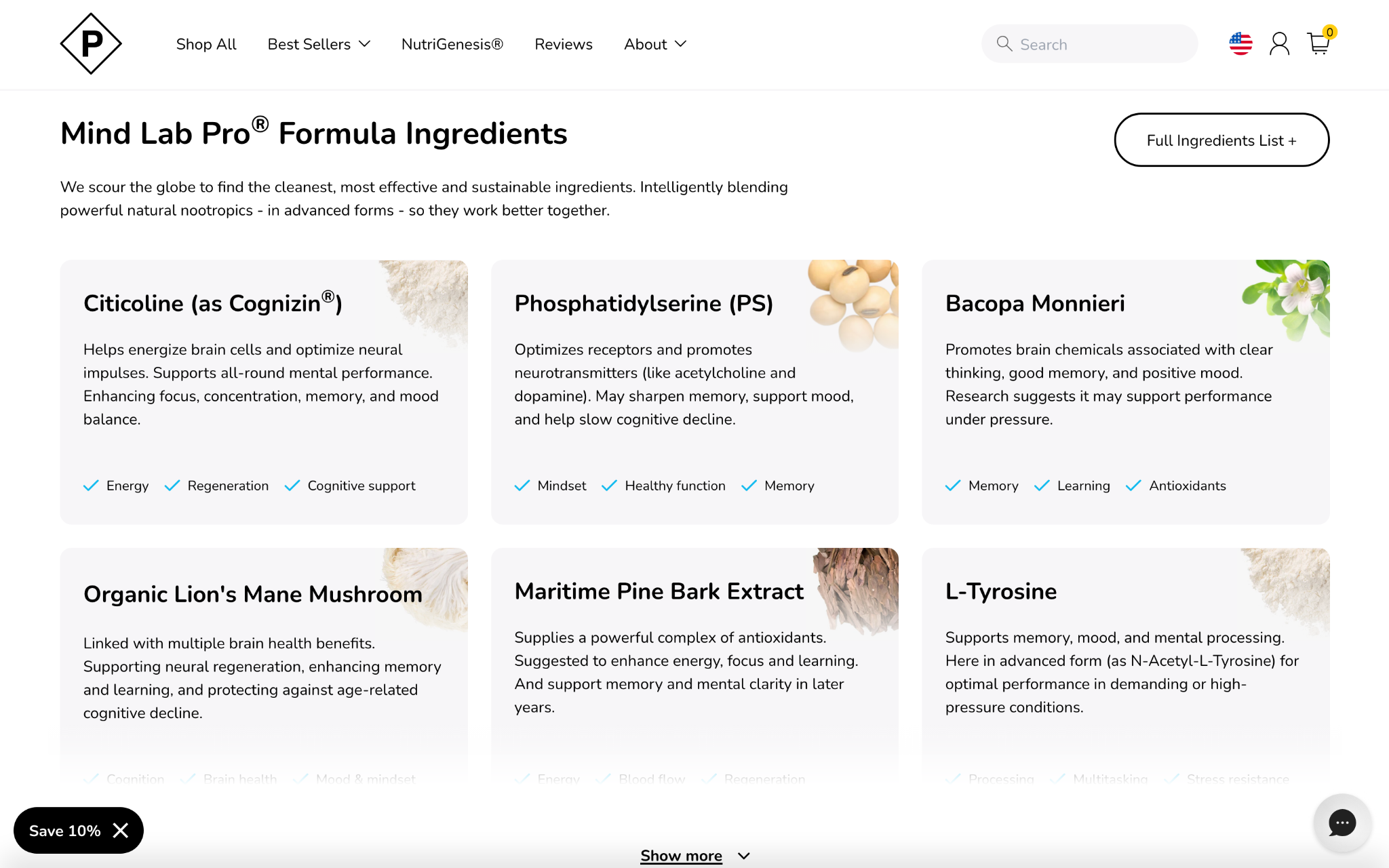
For example, if you check out Performance Lab, you’ll see it sells products like nootropic supplements meant to elevate cognitive function. But chances are, a significant portion of this brand’s target audience isn’t an expert on nootropic ingredients. So they may be skeptical about the efficacy of these compounds. That’s why Performance Lab describes each ingredient individually, explaining what it is and what it does. In doing so, the brand overcomes a major conversion obstacle, ensuring a much higher level of product understanding among potential leads and boosting conversion confidence in the process.
Source: performancelab.com

At the beginning of this article, we mentioned that most consumers feel overwhelmed by having too many product options. If that’s the case, one of the most logical ways to guide them through the buyer’s journey (and do so with confidence) is to help them narrow down their options to solutions that truly match their needs. That requires expert product education, and one of the best ways to support your leads is to produce product comparison guides.
But why is product comparison content so effective at driving online conversion decisions?
These resources align customer needs with solutions that genuinely match an intended use case. And here’s why that matters. According to Adweek, 72% of shoppers expect brands to meet their unique needs and expectations.
So, does your target audience need to navigate multiple options while shopping? Does their purchase satisfaction directly depend on whether they chose the right solution for their intended purpose? If so, you need to publish high-quality comparison resources. More specifically, you need to produce buying guides that pay special attention to intended use, performance factors, compatibility, and potential limitations.
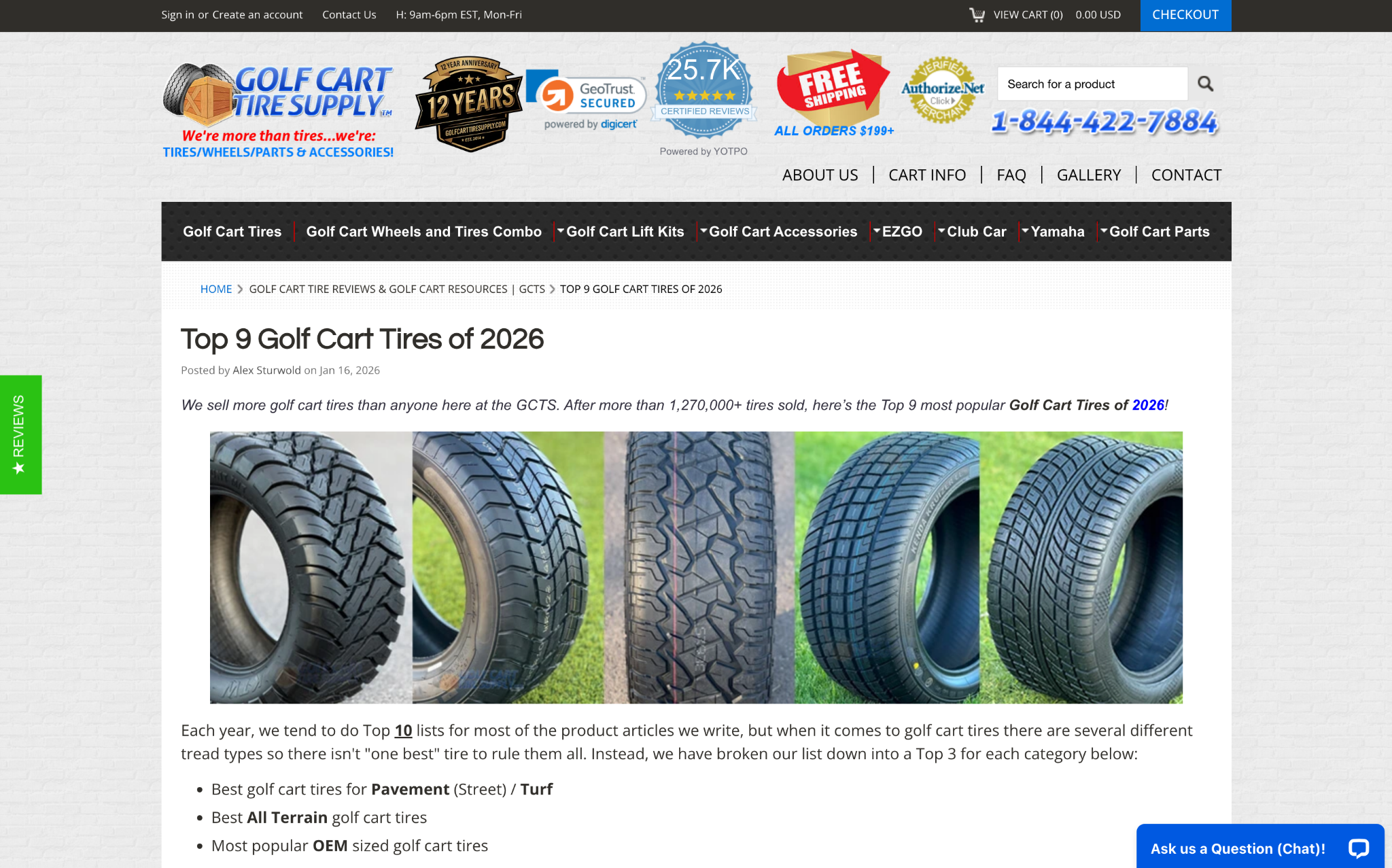
Golf Cart Tire Supply’s overview of the top-rated golf cart tire options in 2026 covers all the bases. The resource provides shoppers with niche product education to boost buying confidence and encourage movement through the sales funnel. It also addresses use-case limitations (like terrain type, compatibility, and manufacturer), ensuring readers understand the trade-offs of their choices instead of simply ranking the tires on a scale of best to worst.
Source: golfcarttiresupply.com
Most consumers have questions they need answered before they’re ready to buy. In some cases, these are minute details that may or may not impact their final purchase decision. In others, what they find out could significantly change their chances of converting.
If you look at data on cart abandonment rates (and the top reasons they happen), you’ll find that many of the top conversion obstacles are easily preventable with clear communication. For instance, disclosing extra costs, discussing delivery times, clarifying return policies, and addressing checkout security concerns can remove major conversion barriers and make shoppers more comfortable with buying.
Furthermore, explaining the ordering process, minimum quantities, sizing, customization options, and production timelines can make online buying decisions easier for your target audience.
Now, the best place to cover all of these questions is in your product descriptions. However, research suggests many web users skim pages (instead of reading word for word). So, adding a product education resource on key pages matters too. That’s where a well-written Frequently Asked Questions page comes into play.
As a collection of common questions and answers, an FAQ section can be an invaluable product education resource for your website.
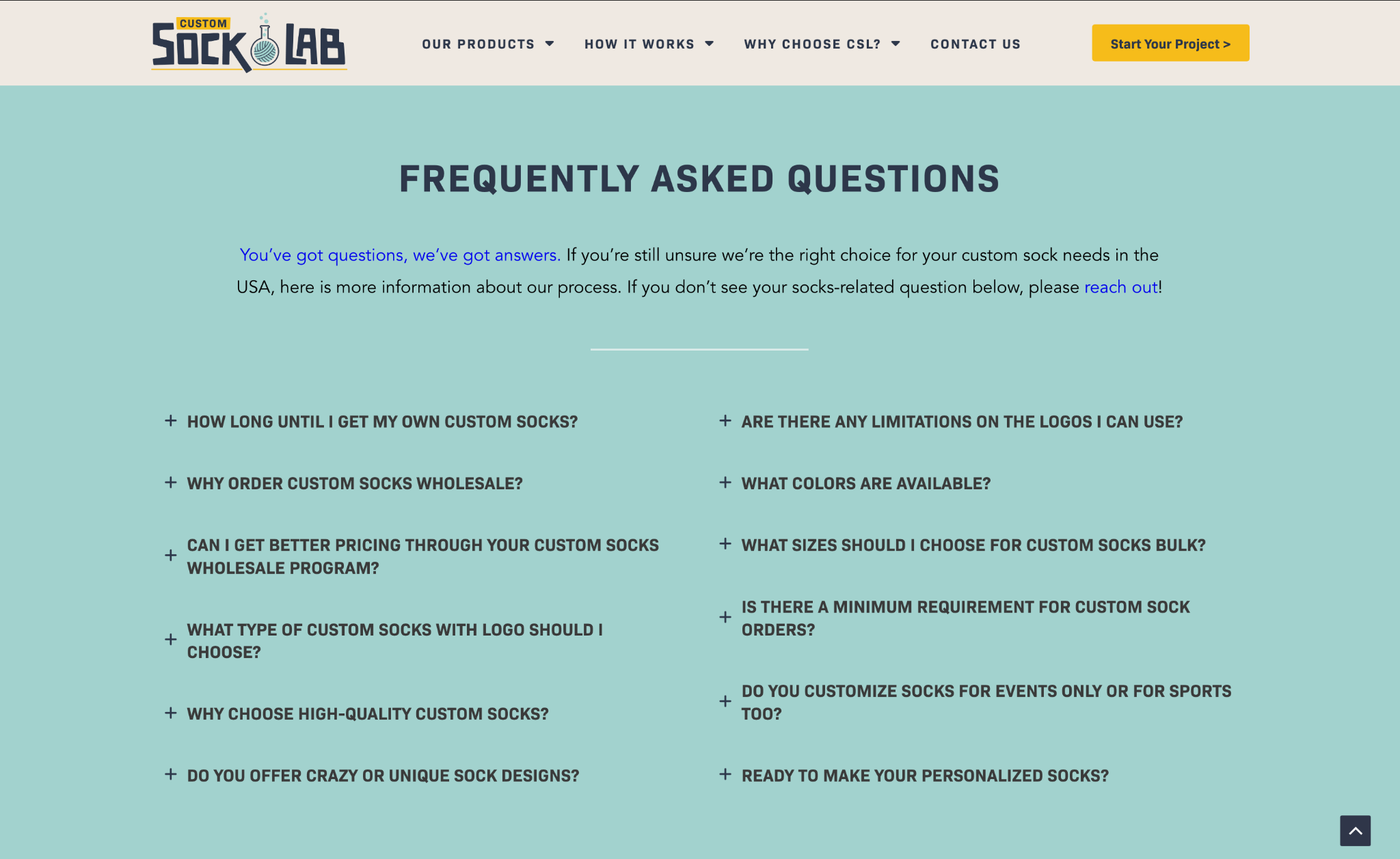
For example, Custom Sock Lab offers a niche service. This brand’s offer isn’t just unique — its operational processes depend directly on customer requests. In other words, each client’s experience depends on their pre-purchase choices. To reduce uncertainty and help potential customers understand the design and production process, Custom Sock Lab includes a comprehensive FAQ section on its homepage, discussing details like production timelines, wholesale programs, product features, customization options, etc., using the content to remove common conversion obstacles and make buying decisions easier for qualified leads.
Source: customsocklab.com
In some industries, traditional product education content works well for driving product understanding. In others, especially niche or innovative verticals, shoppers need more help before comprehending what a solution does, how it works, and how it could benefit them.
In such cases, the best customer education strategy isn’t to give web visitors more information. Instead, it’s to communicate product value in ways that are more likely to drive comprehension and information retention.
Scientific research suggests visuals and multimedia could be the secret ingredient to higher levels of understanding. People process images faster than words. They also remember them more clearly than text. Combine visuals with audio, and you get video, a format 63% of people prefer as their main source of product information.
With this in mind, using visual demonstrations to present your offer is an effective, user-friendly way to drive product understanding, especially when discussing innovative solutions or product features that are difficult to describe with text alone.
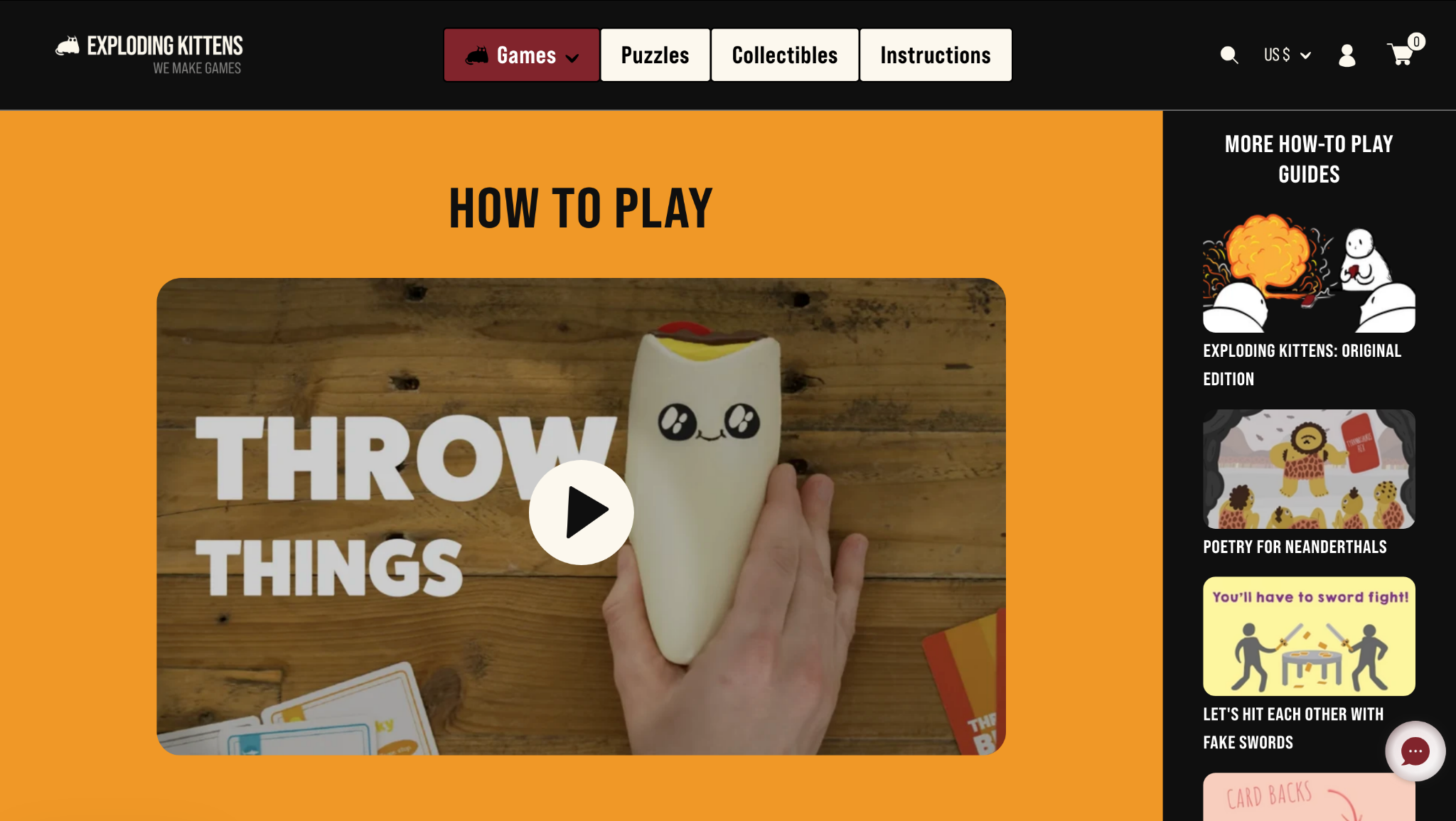
For example, knowing that it’s much easier for buyers to understand a game by watching a video than reading an instruction manual, Exploding Kittens produces entertaining short videos to explain the gameplay rules for its publications. In doing so, the brand doesn’t just equip customers with valuable information and instructions. It does so in a way that retains the brand’s unique personality, turning the learning process into an enjoyable brand experience.
Source: explodingkittens.com
Finally, when exploring ways to make buying decisions easier for your target audience, remember that most consumers want more personalization in 2026.
Research suggests that 70% of consumers feel overwhelmed and uncertain when it takes too long to find an option that matches their needs. As a result, 38% postpone buying, and 21% abandon the buyer’s journey altogether. However, when they get relevant (personalized) product recommendations, 73% say they’re more likely to purchase.
So, how can you help your audience discover options that best fit their unique needs? Well, interactive product selection tools could be the answer.
Interactive quizzes, product finders, and configuration tools are excellent for guiding buyers through the sales funnel, keeping their preferences in mind and providing product education.
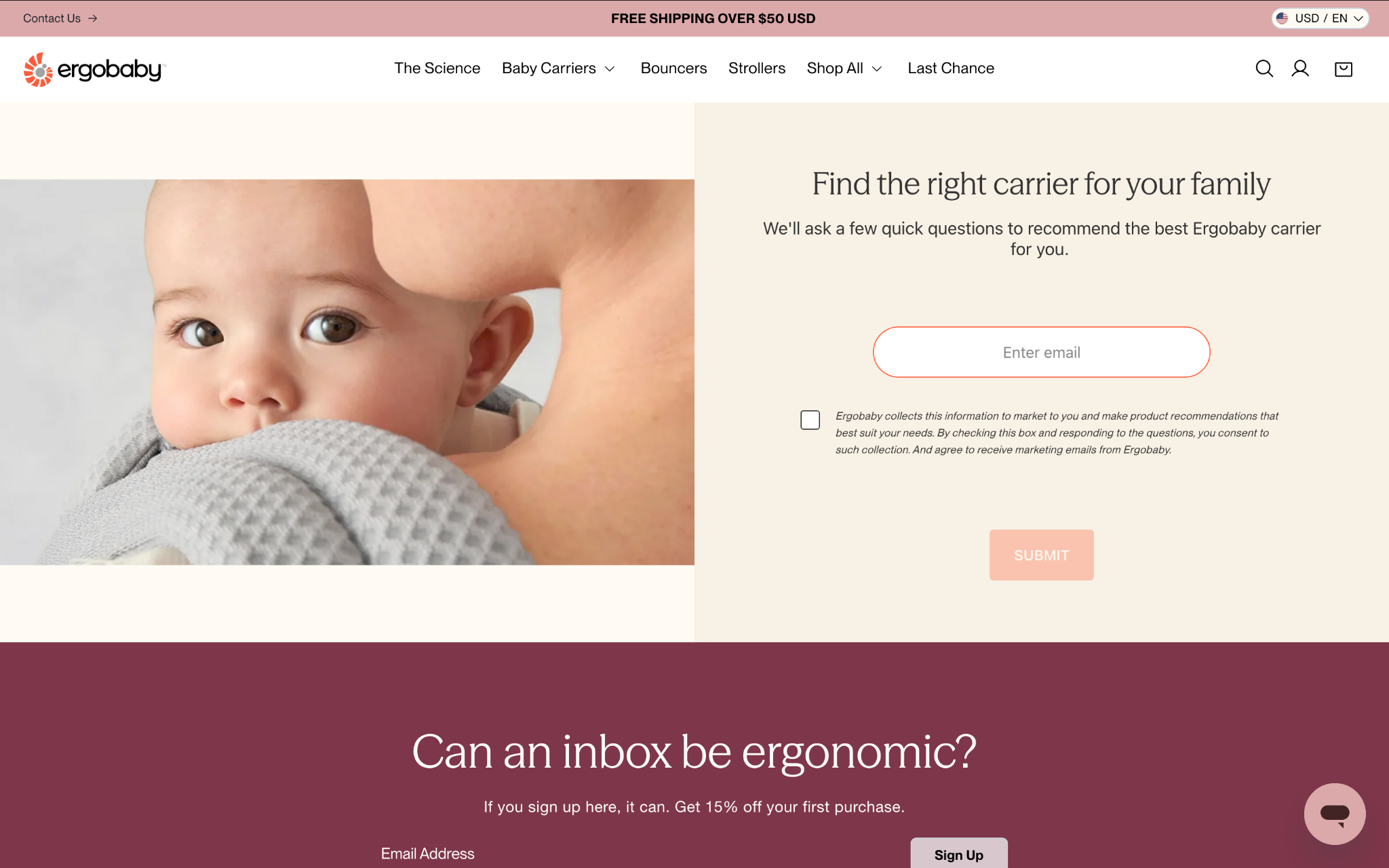
Ergobaby’s Baby Carrier Finder quiz, for instance, is an excellent example of a tool that effectively simplifies complex buying decisions. By guiding shoppers through a series of five questions, this interactive quiz collects information about their preferences and aligns product recommendations with their priorities and needs. For buyers, completing the quiz results in a streamlined, quick buying experience. For the brand, the resource shortens the evaluation phase and reduces customer drop-off by guiding prospects toward the best solutions for their unique pain points.
Source: ergobaby.com
Building a high-converting sales funnel is impossible if you can’t guarantee your prospects recognize the value of your offer. But investing in product education isn’t just key to boosting conversions. It’s equally important for delivering an enjoyable customer experience and maximizing purchase intent across your entire target audience.
The tactics discussed in this article are a great way to help your leads recognize the value of your solutions. Whether you choose to implement one or all of them is entirely up to you. What matters the most is that you align all product education content with your ideal customers’ unique wants and needs, ensuring that the benefits you advertise are exactly what your ideal customers seek.
 AI tools to find & convert leads.
 Send emails at scale