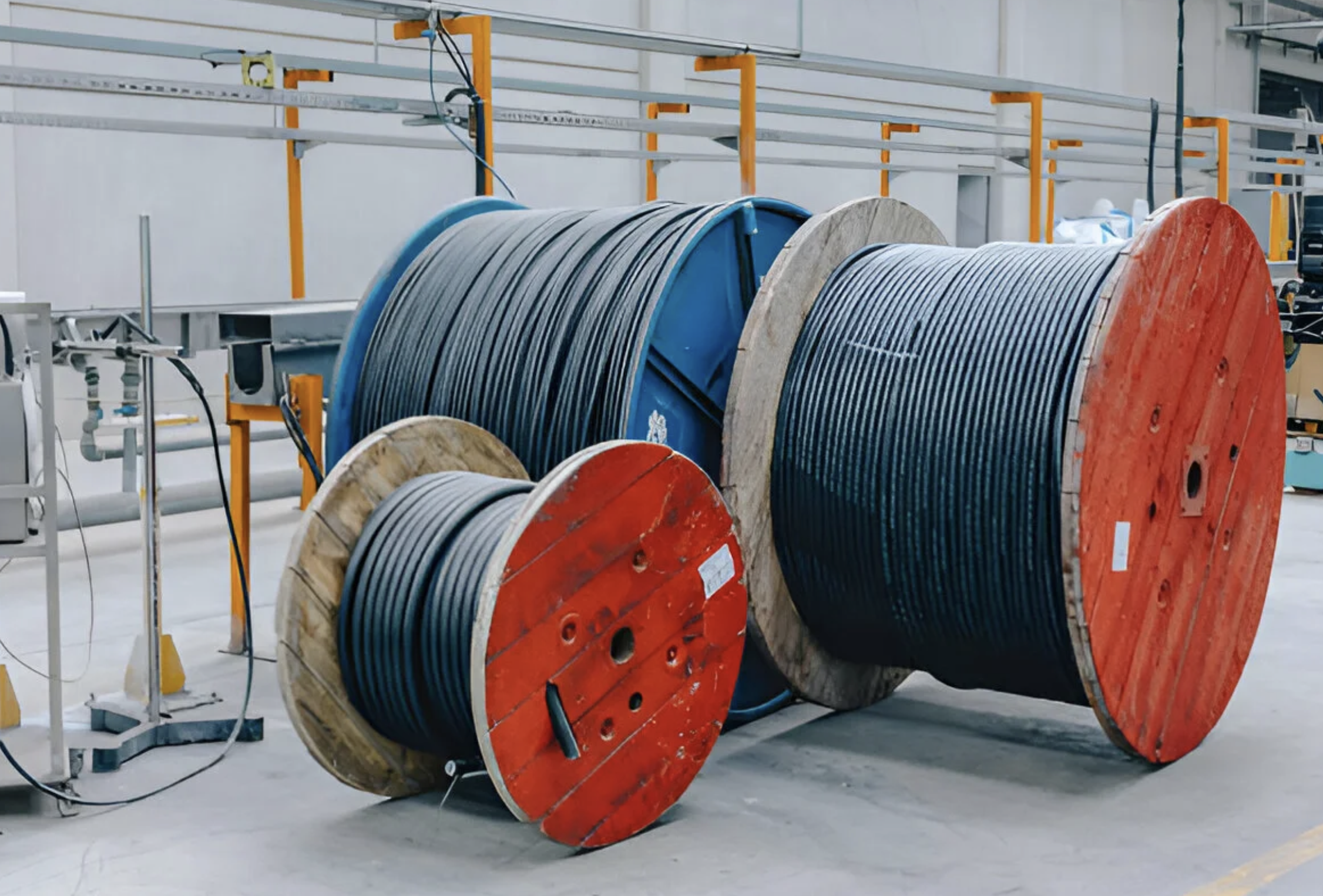
Selecting the wrong cable for an industrial or commercial installation isn't just an inconvenience — it can result in equipment failure, costly downtime, or serious safety hazards. The market offers a wide range of cable types, each engineered for specific conditions, load requirements, and environments. The challenge is that the specifications can feel overwhelming if you're not approaching the decision with a clear framework. Whether you're specifying cables for a new build, a retrofit, or an equipment upgrade, understanding the key variables involved makes the selection process considerably more straightforward.
Before anything else, the electrical specifications of your application define the baseline for every other decision. A cable rated below the system voltage is a safety risk; a cable significantly over-specified for the current load wastes budget without adding value. Industrial and commercial power cables are rated for specific voltage classes — low voltage (up to 1kV), medium voltage (1kV to 36kV), and high voltage above that — and the current-carrying capacity must account for the full load, any anticipated surges, and an appropriate safety margin based on installation conditions.
That’s why many contractors and procurement teams spend time comparing specifications carefully against proven industrial product ranges before placing an order. Manufacturers like Duraline are often referenced in those conversations because the company evolved from an electrical equipment distributor into a producer of electrical equipment used in demanding environments, including projects associated with the U.S. Navy, where reliability and strict performance standards are essential.
Where a cable is installed determines which construction and sheathing materials are appropriate. A cable running through a dry internal conduit faces very different stresses than one buried directly in soil, submerged in water, exposed to UV light outdoors, or routed through an area with chemical or oil exposure. XLPE (cross-linked polyethylene) insulation handles heat and moisture well; PVC is cost-effective for standard indoor applications; EPR (ethylene propylene rubber) suits flexible and high-temperature environments. Getting this wrong accelerates degradation, shortens service life significantly, and can create failure points that are expensive and disruptive to address mid-installation.


The conductor is what actually carries the current, and the material and cross-sectional area both matter significantly. Copper remains the standard for most industrial and commercial installations due to its superior conductivity, flexibility, and long-term reliability. Aluminium is lighter and less expensive per unit length, which makes it common in overhead and large-distribution runs where those properties are prioritised. For conductor sizing, the key variables to work through before specifying include:
• The continuous current load the cable will carry under normal operating conditions
• The maximum permissible voltage drop across the cable run length
• The installation method, which affects derating factors for current capacity
• The ambient temperature range, which influences the cable's effective current rating
Industrial and commercial cable installations must comply with applicable national and international standards — and in many jurisdictions, using non-compliant cable voids insurance coverage and creates liability exposure in the event of an incident. IEC 60502 covers power cables for voltages from 1kV to 30kV; IEC 60227 and IEC 60245 cover PVC and rubber-insulated cables for general use. In the US, NEC Article 310 governs conductor sizing and ampacity. Electrical failures are a leading cause of industrial fires in the United States, with faulty wiring and improper cable selection among the most commonly cited contributing factors. Specifying cables that carry the correct certifications for your application — and verifying those certifications before purchase — is a basic due-diligence step that shouldn't be skipped.
Armoured cables include a mechanical protection layer — typically steel wire armour (SWA) or steel tape armour (STA) — that protects against physical damage, rodent ingestion, and the stresses of direct burial. They're the standard choice for underground runs, cable trays in exposed industrial environments, and anywhere the cable might be subject to impact or compression. Unarmoured cables are appropriate for protected indoor installations where mechanical damage isn't a realistic risk. The armour layer also provides an earthing path in some configurations, which has implications for how the cable is terminated and which gland types are used. Specifying an unarmoured cable for a direct-burial run is a common and costly mistake that armoured specifications exist specifically to prevent.
In commercial buildings, hospitals, transport infrastructure, and any installation where people are present, the fire performance of cables is a serious specification consideration. Standard PVC cables burn readily and produce toxic, dense smoke that significantly hampers evacuation. Low smoke zero halogen (LSZH or LS0H) cables are engineered to limit smoke emission and avoid releasing corrosive halogen gases when exposed to fire — a critical property in enclosed spaces. Fire-resistant cables go further still, maintaining circuit integrity for a defined period during a fire event, which is essential for life safety systems, including emergency lighting, fire alarms, and sprinkler controls. Building regulations in most countries now mandate specific fire performance ratings for cables in these applications, and specifying below those requirements creates both compliance and safety problems.
A cable decision made during installation will typically live with an operation for decades. Choosing a quality-certified product from a reputable supplier, documenting the specification thoroughly, and maintaining accurate as-built records make future maintenance, fault-finding, and capacity upgrades significantly less complex. It's also worth considering whether the cable route has room for additional runs later, whether junction boxes and termination points are accessible, and whether the specified product is likely to remain available in matching specifications for future extensions. Over-engineering slightly for longevity at the specification stage typically costs less in the long run than having to retrofit or reroute cables because the original selection was too marginal for how the installation evolved.
Choosing the right cable for an industrial or commercial application comes down to working through the variables methodically rather than defaulting to whatever's cheapest or most available. Voltage class, environment, conductor sizing, standards compliance, armour requirements, fire performance, and long-term serviceability all feed into a specification that will perform reliably over years of use. Take the time to get the specification right at the start, and the cable becomes one of the least complicated parts of the project.
 AI tools to find & convert leads.
  Send emails at scale