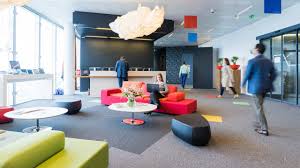
How to Support Hybrid Teams With Smarter Workspace Design
More than 50% of remote-capable employees now split their time between home and the physical office. When these professionals make the commute, they expect an environment equipped for both high-energy collaboration and deep, uninterrupted concentration.
However, most organizations force their returning staff into outdated open-plan layouts built for traditional five-day workweeks. The severe mismatch between structural design and modern daily habits destroys productivity and accelerates employee burnout.
Modernizing a corporate floor plan requires companies to construct an adaptable environment that supports fluctuating daily attendance and diverse project demands.
The traditional corporate floor plan assumes every employee arrives at the same time, sits at an assigned desk, and stays all day. This outdated model immediately fails hybrid teams.
When professionals split their schedules between a home workspace and the company building, their functional requirements change drastically. They no longer need massive rows of identical, permanent desks for solo tasks.
Instead, they require environments built to support rapid brainstorming, continuous digital meetings, and spontaneous collaboration. A rigid layout forces active teams into static environments, limiting operational speed and frustrating daily communication.
Also read: 7 Affordable AI Tools That Boost Business Productivity
Staff members commute to the physical building seeking specialized resources they cannot easily access from their living rooms. They look for high-performance acoustic spaces, professional-grade conference rooms, and dedicated areas for face-to-face strategizing.
Modern workers prioritize floor plans optimized for both team problem-solving and deep, uninterrupted concentration. If the corporate environment only offers noisy open-bench seating, professionals view the commute as a barrier to daily output rather than a valuable business tool.
Business leaders must provide a versatile layout that supports how modern professionals operate, ensuring the building adds tangible value to the workday.


A poorly optimized layout actively sabotages daily operations. When the physical environment fails to accommodate modern scheduling, employees encounter constant auditory and spatial distractions that get in the way of their daily output.
Open layouts maximize seating capacity but destroy acoustic control. Hard architectural elements such as polished concrete floors, glass partitions, and exposed metal ceilings reflect sound frequencies throughout the room.
Every spontaneous conversation, ringing phone, and chair movement is amplified, creating a chaotic ambient noise that exhausts employees and ruins their ability to concentrate.
Digital meetings dominate modern schedules. Taking a video call at an open-bench workstation forces nearby colleagues to listen to half the conversation, creating an immediate auditory distraction.
Staff members require isolated environments to discuss sensitive data or communicate with remote colleagues. Placing office pods near high-traffic areas provides immediate acoustic protection, giving professionals a secure place for digital communication without broadcasting their conversations.
A single employee who takes a daily video check-in often occupies a standard conference room designed for 8 people. This spatial mismatch creates a severe bottleneck. Massive architectural rooms go to waste on simple solo tasks, leaving larger collaborative groups without a proper location to host critical strategy sessions or client presentations.
Constant movement and overlapping chatter create a false sense of high output. The floor might look energetic, but task completion plummets when workers cannot find the right physical space for their immediate needs. A disorganized, chaotic layout drives employees back to their home offices, rendering the commercial real estate investment useless.
Deep concentration dictates the success of any workday. Returning team members require dedicated quiet zones to execute complex tasks without continuous auditory interruptions. When a floor plan lacks visual and acoustic boundaries, workers spend significant mental energy simply trying to block out their surroundings.
The right workspace can support both quiet work and communication simultaneously. Floor plans must balance high-energy collaborative areas with isolated focus zones. Installing soundproof office pods serves as a practical solution for teams that need private, low-distraction spaces without committing to a full architectural rebuild.
Providing these reliable, enclosed structures directly improves job satisfaction and daily task completion. When employees know they have a guaranteed quiet environment waiting for them, they view the physical building as a powerful tool for productivity rather than a chaotic room they must endure.
Improving the daily office environment does not demand tearing down drywall or hiring construction crews. Strategic, low-cost modifications to the existing floor plan resolve the most common daily frustrations.
Mixing high-volume sales calls with deep-focus data analysis guarantees frustration. The layout must physically separate different working styles to function properly.
Grouping collaborative, noisy departments on one side of the building leaves the opposite end dedicated strictly to quiet, independent tasks. Establishing these distinct boundaries ensures employees know where to sit based on their immediate daily goals.
Open benching systems expose staff to constant movement and overlapping conversations. Placing tall bookshelves, mobile whiteboards, or heavy plant walls between desk clusters instantly breaks line-of-sight interruptions.
Adding clamp-on acoustic felt panels to individual desks absorbs ambient chatter right at the source. These minor physical barriers block both sound waves and visual clutter, allowing workers to maintain their concentration.
Static environments trap workers in uncomfortable situations. Providing mobile furniture, lightweight seating, and adjustable standing desks gives staff the ability to adapt their surroundings.
When professionals can pull a few office chairs together for an impromptu meeting or easily retreat to an isolated corner for solo work, they work more efficiently.
Empty corners, wide hallways, and massive, vacant lobbies are all wasted commercial real estate. Transforming these dead zones into functional areas maximizes the building's utility.
Placing a couple of soft chairs and a small table in an unused corner or introducing single-booth office pods creates an instant meeting spot. Repurposing these neglected areas frees up the main conference rooms and spreads staff more evenly across the available square footage.
Running an office with a hybrid team means looking at the bigger picture. Instead of just buying new desks, leaders need to focus on how the space functions day-to-day to make sure the money spent on rent is worth it.
Guessing how many desks a team needs often wastes money. Using desk booking software or basic sensors shows how many people come in each day and which rooms stay empty.
Having this information helps leaders decide whether they need to change the office layout or even reduce the office's total size without disrupting the team.
A great meeting room is useless if the video calls keep dropping. Hybrid teams rely heavily on technology to connect people in the office with those at home. Alongside reliable office technology, providing employees with the right work from home equipment, such as professional headsets and webcams, can help maintain clear communication and effective collaboration on remote days. Putting easy-to-use monitors at every desk, adding reliable cameras to meeting rooms, and providing strong Wi-Fi ensure remote workers stay involved in the conversation.
The number of people coming into the office can change from month to month. Building permanent walls makes it hard to adjust later. Using modular furniture, such as office pods and movable dividers, lets companies change the layout in just a few days. This flexible approach keeps the office useful as the business grows or shifts focus.
Supporting a hybrid team requires building an office that fits how modern professionals work today. A successful layout mixes different types of spaces to support both group meetings and quiet, independent tasks.
Tearing down permanent walls is rarely necessary to improve a space. Small, practical changes, such as adding enclosed focus areas, flexible furniture, and clear physical boundaries, give employees the essential tools they need to succeed.
When the office provides reliable resources missing from a home setup, staff members become highly productive and view the commute as a clear benefit.
For companies looking to easily add private focus zones without construction, modular office pods from ReframeSpace offer a practical, immediate solution.
The best layout mixes different types of spaces. Instead of rows of assigned desks, a hybrid office needs open areas for group meetings, closed rooms for private calls, and quiet zones for deep work. This setup lets employees choose the right space for whatever task they need to finish that day.
Design matters because it directly affects daily output. If an office is too loud or lacks private spaces, hybrid workers will struggle to concentrate. A well-designed workspace gives staff a clear reason to commute by offering environments and physical resources they cannot get at home.
Office design supports this by creating clear physical boundaries. Room dividers, acoustic panels, or modular booths help separate loud meeting areas from quiet work zones.
Giving employees the ability to move between a group table and a silent, enclosed desk ensures they can collaborate when necessary and focus as deadlines approach.
 AI tools to find & convert leads.
  Send emails at scale