
In the ever-evolving landscape of lead generation and outreach, selecting the right tool to enhance your business's prospecting efforts is crucial. This article delves into the top seven alternatives to Apollo and Lemlist for 2026, providing a comprehensive comparison to help you make an informed decision. From Anyleads' advanced AI tools for seamless email campaigns to HubSpot's robust CRM and marketing automation capabilities, each platform offers unique features and pricing models tailored to different business needs. You'll explore how tools like Instantly and Moosend cater to high-volume email outreach and marketing automation, respectively, and discover the strengths of multichannel platforms like Reply.io. By understanding the key criteria for choosing the best fit, including integration capabilities and pricing structures, you'll be equipped to enhance your outreach strategies effectively.
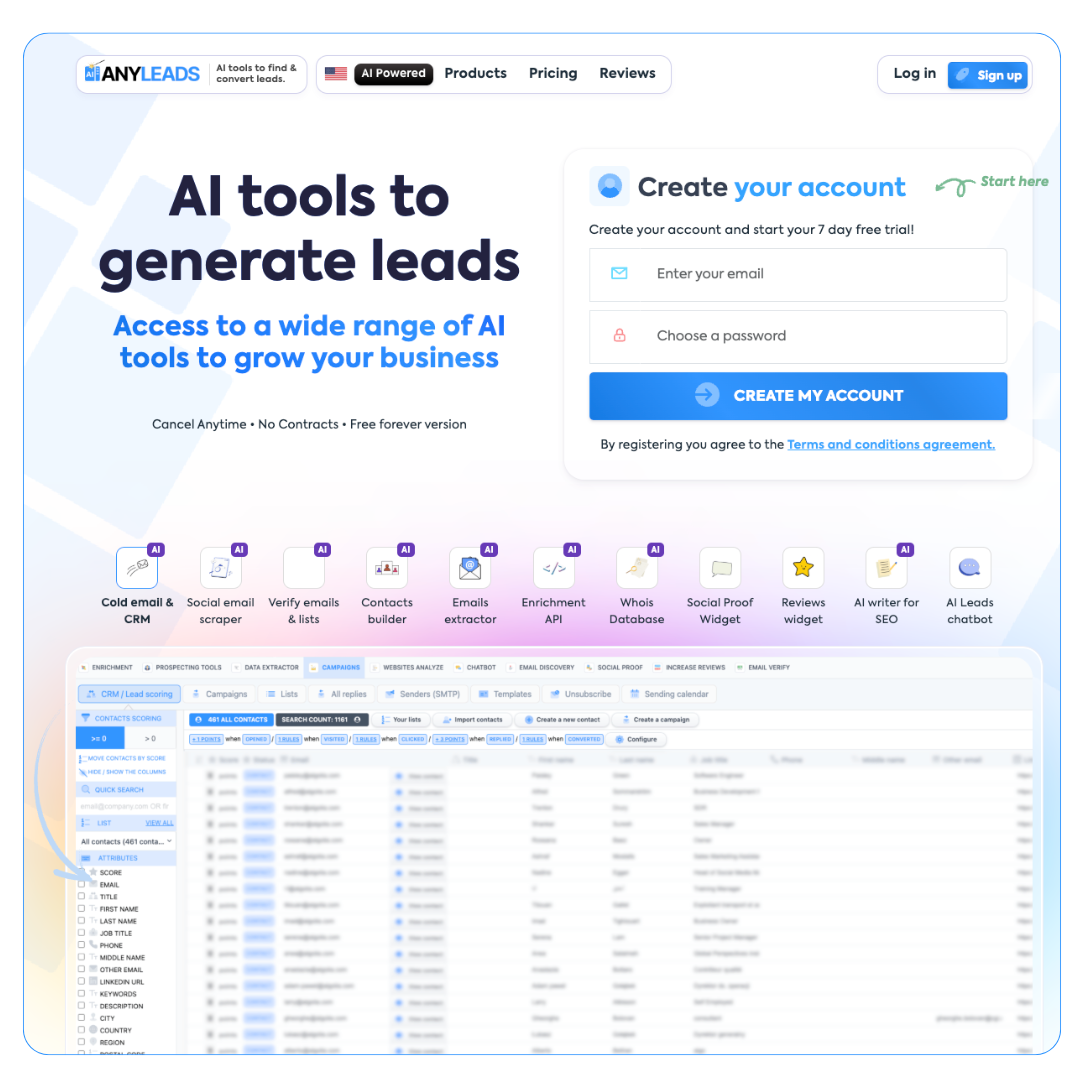
Anyleads is particularly well-suited for businesses focused on lead generation and outreach. This platform offers a comprehensive suite of tools designed to streamline email outreach campaigns, making it an attractive option for teams looking to enhance their prospecting efforts. Its capabilities in lead scoring and CRM integration further solidify its position as a robust choice for companies aiming to improve their sales pipeline management.
However, Anyleads might not be the perfect fit for every organization. Teams that require advanced personalization in their outreach efforts may find its features somewhat limited. The platform's primary strength lies in its ability to handle large volumes of leads efficiently, rather than catering to highly tailored communication strategies.
When it comes to pricing, details about Anyleads' cost structure remain unclear. This lack of transparency can be a consideration for budget-conscious businesses. Despite this, the platform's main features include robust email outreach capabilities, effective lead scoring mechanisms, and seamless CRM integration, which can significantly enhance sales and marketing workflows.
Anyleads is designed to fit well into existing CRM and automation setups, offering integrations that facilitate smoother data management and communication processes. This makes it a valuable asset for teams seeking to optimize their sales operations without overhauling their current systems.
| Feature | Description |
|---|---|
| Email Outreach | Comprehensive tools for managing email campaigns |
| Lead Scoring | Effective mechanisms for prioritizing leads |
| CRM Integration | Seamless integration with existing CRM systems |
While Anyleads excels in many areas, it does have its limitations. The platform's multichannel capabilities are somewhat restricted, which could be a drawback for teams looking to diversify their outreach channels beyond email. As such, businesses that prioritize a multichannel approach might need to explore other options.
Ultimately, Anyleads is best avoided by teams that require a high degree of personalization in their outreach strategies. For those seeking more diverse communication tools, platforms focused on data enrichment tools can help teams achieve their goals more effectively.
Apollo.io is particularly well-suited for sales teams needing accurate contact data. Its extensive contact database and ability to sync with various CRM systems make it a powerful tool for businesses focused on lead generation and nurturing. The platform is designed to help sales teams streamline their outreach efforts by providing access to a vast array of contact information, enabling them to connect with potential clients more effectively.
For teams that rely heavily on data-driven approaches to sales, Apollo.io offers the precision and reliability needed to support their strategies. This makes it an attractive option for larger organizations that require robust data solutions.
Apollo.io's pricing starts at $49 per seat, which provides access to its core features. These include a comprehensive contact database, automated sequences for email outreach, and seamless CRM synchronization. These features are essential for teams looking to automate their sales processes and enhance their efficiency.
The platform's CRM integration capabilities ensure that users can maintain a cohesive workflow across different tools, reducing the need for manual data entry and allowing for more efficient management of sales pipelines. This integration is a significant advantage for teams that use multiple software solutions in their sales operations.
While Apollo.io offers a range of powerful features, it may not be the ideal choice for small teams with limited budgets. The cost can quickly add up for larger teams due to its per-seat pricing model. Consequently, smaller businesses or startups might find the financial commitment challenging, especially if they have tight budget constraints.
For those seeking an all in one alternative to Apollo and Lemlist, it's crucial to consider both the long-term costs and the specific needs of their sales teams. Exploring other platforms focused on data enrichment tools can help teams find a solution that aligns more closely with their financial and operational requirements.
| Feature | Description |
|---|---|
| Contact Database | Extensive database for accurate lead information |
| Sequences | Automated email outreach capabilities |
| CRM Sync | Integration with various CRM systems |

Lemlist stands out as an excellent choice for businesses seeking personalized multichannel outreach. It offers unique features like email and LinkedIn sequences, allowing users to engage prospects through multiple channels. This makes it particularly effective for those who want to create a more comprehensive outreach strategy. The platform's visual personalization capabilities further enhance its appeal, enabling users to tailor messages with personalized images and videos, which can significantly increase engagement rates.
However, Lemlist's strength in multichannel outreach may not be fully leveraged by teams that focus solely on email volume. For these teams, the platform's additional features may not justify its cost, and they might find more value in tools specifically designed for high-volume email campaigns.
Lemlist's pricing begins at $69 per month, which positions it as a mid-range option in the market. This starting price provides access to its core features, including email and LinkedIn automation. The ability to integrate visual personalization into campaigns is a standout feature, offering users the chance to differentiate their outreach efforts from more generic approaches.
Despite its appealing features, Lemlist's pricing can escalate if users require access to its full suite of capabilities. This can be a consideration for smaller teams or startups with limited budgets. For those interested in exploring alternatives with potentially lower costs, platforms focused on data enrichment tools can help teams maximize their outreach effectiveness without breaking the bank.
While Lemlist excels in personalized outreach, it has some limitations, particularly in its CRM and automation fit. The platform offers limited integration options with CRM systems, which might pose challenges for teams that rely heavily on CRM-driven workflows. Additionally, the higher price point for accessing all features may deter those focused solely on email volume.
Teams that prioritize high-volume email campaigns without the need for multichannel engagement or advanced personalization might find Lemlist's offerings excessive. In such cases, exploring alternatives that specialize in email volume and cost-efficiency could provide a better fit.
| Feature | Details |
|---|---|
| Best for | Personalized multichannel outreach |
| Starting Price | $69 per month |
| Main Features | Email and LinkedIn sequences, visual personalization |
| CRM/Automation Fit | Limited |
| Limitations | Higher price for full features |
| Who Should Skip | Teams focused solely on email volume |

Instantly is particularly well-suited for businesses focusing on high-volume cold email outreach. Its ability to manage unlimited mailboxes makes it a prime choice for teams looking to scale their email campaigns without hitting volume limits. The platform also includes a warmup feature, which helps in maintaining deliverability rates by gradually increasing the number of emails sent.
Additionally, Instantly offers AI agents that assist in automating responses, which can significantly enhance efficiency in handling large-scale campaigns. However, it's important to note that Instantly is not designed for deep personalization, making it less ideal for teams that prioritize highly customized email interactions.
Instantly's pricing starts at $47 per month, offering a competitive entry point for businesses looking to engage in extensive email outreach. The platform's main features include unlimited mailboxes, email warmup capabilities, and AI-driven agents that streamline campaign management.
Despite its robust feature set for high-volume operations, Instantly does not integrate with CRM systems or offer advanced automation fits. This limitation could be a deciding factor for companies that rely heavily on CRM integrations to track and manage customer interactions.
While Instantly excels in handling large volumes of emails, its lack of focus on personalization features can be a drawback for some users. Teams that require deep personalization in their outreach efforts might find Instantly lacking in this area.
Therefore, organizations that need to maintain a high level of personalized communication with their clients might want to consider other options. For a detailed comparison of Instantly with other platforms like Apollo and Lemlist, visit this comparison page.
| Feature | Instantly |
|---|---|
| Best For | High-volume cold email outreach |
| Starting Price | $47 per month |
| Main Features | Unlimited mailboxes, warmup, AI agents |
| CRM/Automation Fit | No |
| Limitations | Less focus on personalization |
| Who Should Skip It | Teams needing deep personalization features |
Moosend is a robust platform primarily best for email marketing automation. It offers a suite of tools designed to streamline email campaigns, making it an excellent choice for businesses focusing on enhancing their email marketing strategies. With automation workflows and landing pages included, Moosend caters to those looking to optimize their customer engagement through targeted email communications.
For teams that prioritize email marketing above other digital marketing channels, Moosend provides a focused approach that can help achieve significant improvements in campaign efficiency and effectiveness. Its user-friendly interface and comprehensive features make it a preferred choice for marketers seeking to automate and personalize their email outreach.
The platform has a starting price of $9 per month, making it an affordable option for small to medium-sized businesses. This pricing is competitive, especially considering the range of features offered. Moosend's main features include the ability to create and manage email campaigns, design automation workflows, and develop landing pages that can capture leads effectively.
Moosend supports integration with CRM systems, which enhances its utility for businesses looking to maintain seamless communication with their customers. This integration capability is crucial for automating repetitive tasks and ensuring that marketing efforts are aligned with customer relationship management strategies.
Despite its strengths, Moosend is limited to email marketing and does not offer comprehensive sales tools. This limitation means that businesses seeking a more all-encompassing solution that includes detailed sales tracking and management might need to consider other platforms. For such needs, exploring other options like HubSpot might be more beneficial.
Teams that require a broader range of sales and marketing tools should skip Moosend in favor of platforms that provide a more integrated approach. However, for those focused solely on enhancing their email marketing capabilities, Moosend remains a strong contender. For more insights on alternatives, you can visit the Top 4 Apollo Alternatives For Small Sales Teams 2026.
| Feature | Details |
|---|---|
| Best For | Email Marketing Automation |
| Starting Price | $9 per month |
| Main Features | Email campaigns, automation workflows, landing pages |
| CRM Integration | Yes |
| Limitations | Limited to email marketing |
| Who Should Skip | Teams needing comprehensive sales tools |
HubSpot is particularly well-suited for businesses seeking a robust CRM and marketing automation platform. It offers a comprehensive suite of tools that cater to various business needs, including CRM functionalities, email marketing, and lead management. This makes it an ideal choice for companies aiming to streamline their customer relationship processes while simultaneously managing marketing efforts.
While HubSpot excels in providing a cohesive platform for CRM and marketing automation, its capabilities may be overkill for smaller teams or businesses that require only basic outreach solutions. The platform's extensive features are best leveraged by medium to large enterprises that can fully utilize its advanced functionalities.
HubSpot's pricing model is appealing, particularly for startups and small businesses, as it offers a free plan for up to two users. This allows new users to explore its core functionalities without immediate financial commitment. The main features include a well-integrated CRM system, comprehensive email marketing tools, and effective lead management capabilities. These features are designed to enhance customer engagement and improve overall marketing efficiency.
Despite the attractive starting price, businesses should be aware that costs can increase significantly as they expand their usage of HubSpot's advanced features. As companies grow and require more sophisticated tools, the pricing structure may become a consideration in their decision-making process.
One of the primary limitations of HubSpot is the potential for increased costs as businesses scale up their operations and require more advanced features. This can make it less appealing to small teams or startups that only need basic outreach capabilities. For these organizations, the comprehensive nature of HubSpot might be more than they require, both in terms of functionality and budget.
Therefore, businesses that are primarily focused on simple outreach tasks might find other platforms more suitable. For a deeper comparison of platforms like HubSpot, data enrichment tools can provide additional insights into the best fit for specific business needs.
| Feature | HubSpot |
|---|---|
| Best For | CRM and Marketing Automation |
| Starting Price | Free for two users |
| Main Features | CRM, Email Marketing, Lead Management |
| Limitations | Costs increase with advanced features |
| Who Should Skip | Small teams needing only basic outreach |
Reply.io is a robust platform best suited for multichannel outreach with live data integration. It offers a comprehensive suite of tools that include email, calls, and social media outreach, making it a versatile option for sales teams looking to engage prospects through various channels. This capability allows businesses to maintain consistent and personalized communication, which is crucial for nurturing leads and closing deals.
For companies seeking an all in one alternative to Apollo and Lemlist, Reply.io stands out due to its seamless integration with CRM and automation systems. This integration ensures that all interactions are tracked and managed efficiently, providing sales teams with valuable insights into customer behavior and engagement patterns.
Reply.io offers its services starting at $70 per month, which provides access to its core features. The platform is designed to support sales engagement with tools for email automation, call management, and social media interactions. These features are essential for teams aiming to streamline their outreach processes and improve overall productivity.
Additionally, Reply.io's CRM and automation fit is a significant advantage for businesses looking to integrate their sales and marketing efforts. This compatibility ensures that all customer interactions are synchronized across platforms, enabling a more holistic approach to customer relationship management.
While Reply.io offers a powerful set of features, it may not be the best fit for every organization. One of its primary limitations is the higher cost associated with accessing its full suite of features. This can be a barrier for smaller teams or startups operating on a tight budget.
Teams with limited financial resources might find other platforms more suitable, especially those focused on data enrichment tools that offer similar capabilities at a lower price point. Therefore, businesses should carefully evaluate their budget and feature requirements before committing to Reply.io.
| Feature | Details |
|---|---|
| Best For | Multichannel outreach with live data |
| Starting Price | $70 per month |
| Main Features | Email, calls, and social outreach |
| CRM/Automation Fit | Yes |
| Limitations | Higher cost for full features |
| Who Should Skip | Teams with a tight budget |

When considering an alternative to Apollo and Lemlist, it's crucial to understand the criteria that will guide your decision. Key factors include pricing, feature set, ease of use, and integration capabilities. For instance, a tool like HubSpot offers comprehensive CRM features but may come at a higher cost, making it suitable for businesses seeking robust functionality over budget constraints.
Another contender is Mailshake, known for its simplicity and efficient email outreach capabilities. While it might not offer the extensive CRM features of HubSpot, its affordability and ease of use make it an ideal choice for startups or small businesses. Evaluating these aspects will help align the tool with your specific business needs.
A frequent mistake when selecting a tool is focusing solely on price without considering the long-term value and scalability. For example, while a tool like Mailshake might be cost-effective initially, it may lack advanced features needed as your business grows. Therefore, consider both current and future needs.
Another pitfall is neglecting integration capabilities. Ensure the chosen tool can seamlessly integrate with your existing software stack. HubSpot, for instance, offers extensive integration options, which can streamline workflows and enhance productivity. Avoid these common errors to ensure a well-informed decision.
Here's a comparison table to help visualize the differences:
| Tool | Best for | Starting price | Main feature | Limitation |
|---|---|---|---|---|
| Anyleads | Lead generation and outreach | pricing unclear | Email outreach, lead scoring, CRM integration | Limited multichannel capabilities |
| Apollo.io | Sales teams needing accurate contact data | $49 per seat | Contact database, sequences, CRM sync | High cost for larger teams |
| Lemlist | Personalized multichannel outreach | $69 per month | Email and LinkedIn sequences, visual personalization | Higher price for full features |
| Instantly | High-volume cold email outreach | $47 per month | Unlimited mailboxes, warmup, AI agents | Less focus on personalization |
| Moosend | Email marketing automation | $9 per month | Email campaigns, automation workflows, landing pages | Limited to email marketing |
| HubSpot | CRM and marketing automation | Free for two users | CRM, email marketing, lead management | Costs increase with advanced features |
| Reply.io | Multichannel outreach with live data | $70 per month | Email, calls, and social outreach | Higher cost for full features |
To further explore the effectiveness of AI-driven tools in marketing, you might find the 6 Ai Ad Makers I Tested In 2026 Real Features Honest Takes And What Actually Works article insightful.
Understanding the pricing structures of various all in one alternatives to Apollo and Lemlist will help you make an informed decision based on your budget and requirements.
The pricing structures for all-in-one outreach tools vary significantly, offering both flexibility and complexity. Some platforms, like Apollo, implement a per-user pricing model, which can be beneficial for teams with a stable number of users. In contrast, other tools, such as Lemlist, adopt a per-email pricing strategy, which might favor businesses with fluctuating email volumes. This diversity in pricing models allows companies to select an option that aligns with their specific operational needs.
Additionally, certain platforms provide a subscription-based model that includes a set number of emails per month, while others offer a credit-based system where users purchase credits that can be used as needed. This can be particularly advantageous for businesses that experience seasonal variations in their outreach efforts. However, it's crucial to consider potential hidden costs, such as charges for data access or additional functionalities, which can impact the overall budget.
When evaluating the pricing tiers of these tools, it's essential to assess what features are included at each level and how they contribute to overall value. For instance, some platforms may offer basic email sending capabilities at lower tiers, while advanced features like CRM integrations and personalized templates are reserved for higher-priced plans. This tiered approach allows companies to select a plan that best fits their current needs while providing room for growth.
Feedback from current users often highlights the importance of understanding these tiers, as unexpected costs can arise from needing additional features not included in the base pricing. For example, while some platforms offer unlimited sending options at a flat fee, others might charge extra for data enrichment tools, which can be a critical component for effective outreach. Understanding these nuances can help businesses make informed decisions and ensure they receive the best value for their investment.
| Tool | Starting price | Best for |
|---|---|---|
| Anyleads | pricing unclear | Lead generation and outreach |
| Apollo.io | $49 per seat | Sales teams needing accurate contact data |
| Lemlist | $69 per month | Personalized multichannel outreach |
| Instantly | $47 per month | High-volume cold email outreach |
| Moosend | $9 per month | Email marketing automation |
| HubSpot | Free for two users | CRM and marketing automation |
| Reply.io | $70 per month | Multichannel outreach with live data |
For more detailed comparisons of these tools, platforms focused on data enrichment tools can help teams make informed decisions.
Apollo and Lemlist offer distinct features that cater to different aspects of sales and marketing. Apollo is renowned for its extensive database, boasting over 230 million contacts, which is a significant advantage for teams focused on broad outreach. In contrast, Lemlist emphasizes personalization and multichannel outreach, making it ideal for teams that prioritize tailored communication.
While Apollo provides a wide range of integrations with over 50 platforms, Lemlist has a more limited number of native integrations but compensates with support for third-party tools. This means that if your team relies heavily on specific CRM or sales tools, Apollo might offer a more seamless experience. However, if personalization is your primary goal, Lemlist's capabilities in that area might outweigh its integration limitations.
Choosing the right alternative to Apollo or Lemlist depends on several factors, including your team's size, budget, and specific needs. For teams looking for extensive contact databases and robust integration options, Apollo is often the better choice. However, if your focus is on creating personalized campaigns and leveraging multichannel strategies, Lemlist could be more suitable.
Consider the long-term costs associated with each platform. Apollo's pricing ranges from free to $119 per user per month, while Lemlist starts at $69 per month. Teams should evaluate how these costs align with their budget and expected growth. Additionally, issues such as data accuracy and high bounce rates reported by some Apollo users are crucial considerations for teams planning to scale.
Ultimately, the decision should be based on your team's specific requirements and the platform's ability to deliver data enrichment tools that enhance your sales processes.
Integration capabilities are a critical factor when selecting a platform. Apollo excels with its extensive list of integrations, supporting over 50 platforms, which can facilitate a unified workflow across various sales and CRM tools. This is particularly beneficial for teams that need to streamline their operations and maintain a cohesive system.
On the other hand, Lemlist's integration options are more limited in terms of native support, but it does offer compatibility with several third-party tools. This means that while it might require more effort to integrate with your existing systems, it can still fit into a broader tech stack with some customization.
Some tools offer databases with millions of verified contacts, enhancing lead generation. The practical signals around Which All In One Alternative To Apollo And Lemlist Option Fits Best? are what change the decision.
Pricing can vary significantly, with some platforms offering free trials while others charge monthly fees.
Certain platforms provide advanced personalization features, such as dynamic content in emails.
| Point | What to check |
|---|---|
| Which All In One Alternative To Apollo And Lemli | Confirm the practical details that affect the decision. |
| Constraints | Note limits, costs, timing, or fit that change the recommendation. |
Teams evaluating Which All In One Alternative To Apollo And Lemlist Option Fits Best? often cross-check details in related documentation.
In conclusion, selecting an all-encompassing tool to replace Apollo and Lemlist in 2026 requires a careful evaluation of your business needs and outreach strategies. Anyleads offers a comprehensive suite for email outreach and CRM integration, making it ideal for lead generation-focused businesses, while Apollo.io excels with its extensive contact database, perfect for data-driven sales teams. Lemlist shines in personalized multichannel outreach, offering unique features like email and LinkedIn sequences, though it may not be cost-effective for teams focused solely on email volume. Instantly and Moosend cater to high-volume email outreach and marketing automation, respectively, providing scalability and efficiency. HubSpot stands out with its robust CRM and marketing automation capabilities, suitable for businesses seeking a cohesive platform. Reply.io provides versatility with its multichannel outreach tools, ideal for engaging prospects across various channels. When choosing the best fit, consider factors such as pricing models, integration capabilities, and specific feature sets. To make an informed decision, compare these platforms side by side, focusing on how each aligns with your outreach goals and budgetary constraints.
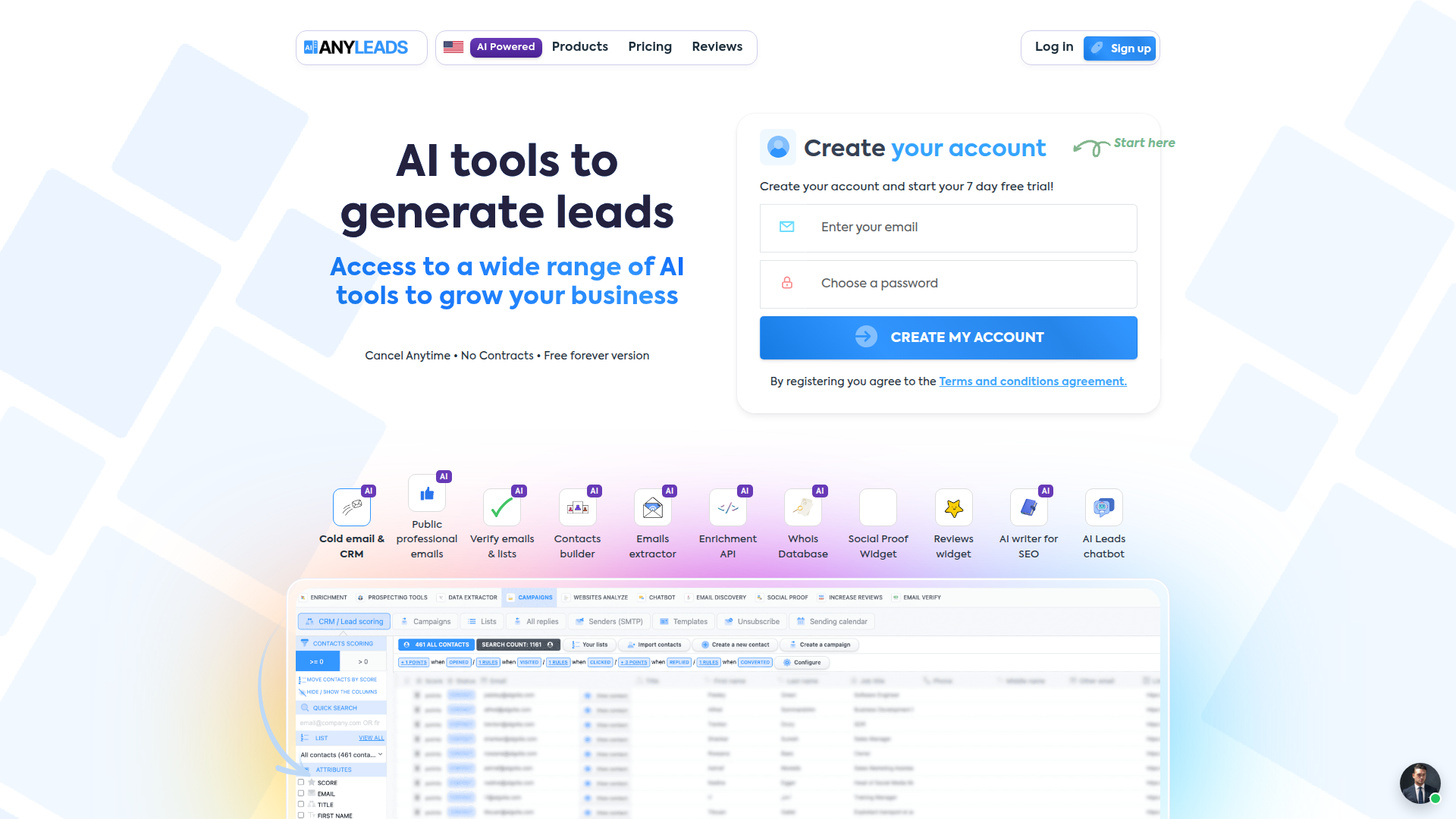
Anyleads stands out as a powerful all in one alternative to Apollo and Lemlist, offering businesses a seamless lead generation experience with its innovative AI-driven tools. From automated outreach to discovering verified professional contacts, Anyleads provides a comprehensive suite of features that streamline and enhance your marketing efforts. Whether you're a startup or an established enterprise, Anyleads ensures you can optimize your prospecting strategies and boost your conversion rates effectively. Discover more about Anyleads today!
 AI tools to find & convert leads.
 Send emails at scale